
Skilled Migration Engineers Australia is covered in this guide for Engineers Australia applicants. Australia’s General Skilled Migration (GSM) program offers a clear path for qualified engineers to live and work Down Under. The country regularly updates its Skilled Occupation Lists (SOL) to address labor needs – and engineers have long been in demand.
Engineers considering migration enjoy Australia’s strong economy high quality of life and rich cultural diversity.
For example Engineers Australia notes that it assesses “thousands of overseas engineers” each year to help them meet their migration goals ( https://www.engineersaustralia.org.au ). In practice any engineer who wants to immigrate must navigate several steps: confirming their occupation is eligible obtaining a positive skills assessment from Engineers Australia meeting English requirements securing enough points
and then applying for a visa.
This guide covers each step in detail, from Engineers Australia Migration Skills Assessment to visa options and documentation, ensuring a smooth journey for aspiring migrant engineers.

What Is Skilled Migration for Engineers?
Skilled migration is the Australian government’s system for inviting professionals to relocate to Australia based on their occupations and skills. It is managed by the Department of Home Affairs through the GSM program. Engineers Australia – the national body for the profession – is the official assessing authority for engineers under this program (https://www.engineersaustralia.org.au). In other words, Engineers Australia is the designated assessing authority for many engineering occupations under its Migration Skills Assessment framework. Other technical occupations (such as Civil Engineering Technician, assessed by VETASSESS, or Electrical/Mechanical Engineering Technicians, assessed by TRA) have different assessing authorities, so applicants should verify the official authority for their nominated ANZSCO code. before they can apply for a migration visa. A positive outcome from this Engineers Australia Migration Skills Assessment is mandatory. Engineers Australia makes this clear: “you’ll need a migration skills assessment outcome letter from us before you can apply for a visa to come to Australia” (https://www.engineersaustralia.org.au).
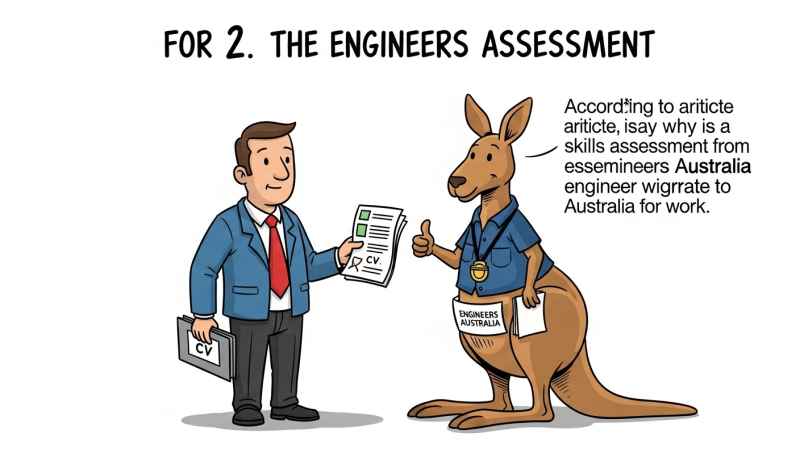
In practical terms, this means the engineer must submit an online application to Engineers Australia, along with supporting documents (degrees, employment records, etc.). Engineers Australia categorizes migrant engineers into four occupational groups: Professional Engineer, Engineering Technologist, Engineering Associate, or Engineering Manager (https://www.engineersaustralia.org.au). Each of these corresponds to specific ANZSCO codes on the SOL.
For example common entries on the occupation list include Professional Engineer (ANZSCO 2339 series) Engineering Technologist (ANZSCO 233914) Engineering Manager (ANZSCO 133211) and Engineering Associate (ANZSCO 3123xx). Your exact code depends on your field and level of qualification. Crucially only occupations officially listed can be used to qualify for a skilled visa.
You must first verify your engineering occupation is on the current SOL before proceeding.
Why Move to Australia as an Engineer?
Australia offers attractive opportunities for engineers. The nation’s infrastructure boom renewable energy projects mining and resources sector and advanced tech industries mean high demand for engineering professionals across several states (e.g. New South Wales Queensland Western Australia Victoria) ( https://liveinmelbourne.vic.gov.au https://www.vic.gov.au ). Engineers in Australia typically enjoy good salaries
strong workplace safety standards and supportive work-life balance policies.
The country’s multicultural society and high living standards are additional draws. Moreover, successful skilled migrants can eventually apply for permanent residence and even Australian citizenship, opening the path to a long-term career in Australia.
Eligible Engineering Occupations
Before applying ensure your occupation is eligible. The Department of Home Affairs publishes detailed Skilled Occupation Lists (SOL) for each visa category. All engineering fields classified under the ANZSCO system are not automatically eligible—only those specifically on the relevant list. For example major professions like Civil Mechanical Electrical
and Mining Engineering typically appear on the Medium and Long-term Strategic Skills List (MLTSSL) making them points-test eligible.
Engineers Australia highlights that their migration assessment covers four broad categories: Professional Engineer, Engineering Technologist, Engineering Associate, and Engineering Manager (https://www.engineersaustralia.org.au). Within those categories are specific specializations (e.g. Civil Engineer, Environmental Technologist, etc.).
In practice you should check the current SOL (via the Home Affairs site) for your exact ANZSCO code. Reliable lists from consultation groups or migration resources confirm that codes like 233111 (Chemical Engineer) 233112 (Materials Engineer) 233211 (Civil Engineer) 233212 (Geotechnical Engineer) etc. are on the 2025 skilled lists). For simplicity
some key codes often used by engineers are:
-
Professional Engineer (ANZSCO 2339xx) – covers most degree-qualified engineers (e.g. electrical, mechanical, civil).
-
Engineering Technologist (ANZSCO 233914) – for technologists with 3-year engineering degrees or equivalent.
-
Engineering Associate (ANZSCO 3123xx) – for diploma-level engineering work.
-
Engineering Manager (ANZSCO 133211) – management roles overseeing engineering projects.
Consult Engineers Australia or Home Affairs if unsure. Each occupation on the SOL has an assessing authority – for occupations within the MSA framework, Engineers Australia is the designated assessing authority.
Visa Options for Engineers
Australia’s skilled migration framework offers several visa subclasses suitable for engineers. The main ones are:
-
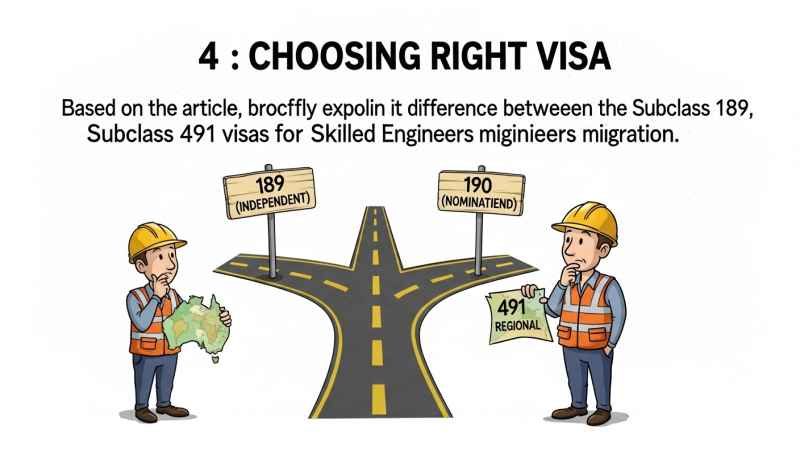
Skilled Independent Visa (Subclass 189) – This is a points-tested permanent visa that does not require any sponsorship. Successful applicants can live and work anywhere in Australia indefinitely. (It has both a points-tested stream and a now-closed New Zealand stream.) ( https://immi.homeaffairs.gov.au ) Because it is not state-specific
it allows maximum freedom once granted.
-
Skilled Nominated Visa (Subclass 190) – A points-tested permanent visa requiring nomination by an Australian state or territory. You must commit to living and working in that state for at least 2 years. Each state runs its own nomination programs for priority occupations. For instance
Victoria notes that the Subclass 190 visa “allows skilled migrants to live and work in Victoria as permanent residents,” but only after the state nomination is secured ( https://liveinmelbourne.vic.gov.au ).
-
Skilled Work Regional (Provisional) Visa (Subclass 491) – A points-tested provisional visa valid for 5 years in designated regional areas. It requires either state nomination or sponsorship by an eligible family member living in a regional area. Visa holders can “live and work in designated regional areas for up to 5 years
with a pathway to permanent residence after 3 years,” per Victoria’s migration site ( https://liveinmelbourne.vic.gov.au ). After 3 years on a 491 visa (and meeting requirements) holders can apply for the Subclass 191 visa (below).
-
Permanent Residence (Skilled Regional) Visa (Subclass 191) – Introduced in 2022 this visa allows eligible 491 (or similar) holders to become permanent residents after at least 3 years on a regional provisional visa. The Vic.gov site confirms that after 3 years on 491 holders may be eligible for the 191 visa
which “provides permanent residence” ( https://liveinmelbourne.vic.gov.au ).
Other engineering-related visas include employer-sponsored ones (Subclass 186/187) or the Temporary Skill Shortage (Subclass 482) visa but for independent skilled migrants the 189/190/491/191 path is most common. Each of these pathways has specific requirements (points English etc.)
but all skilled migration applications require a positive skills assessment from Engineers Australia for engineering occupations ( https://www.engineersaustralia.org.au ).
Step-by-Step Application Process
Embarking on migration involves several clear steps. Below is an outline for an engineer applying through the GSM program:
-
Verify Your Occupation on the SOL. First confirm that your engineering occupation (ANZSCO code) is on the current Skilled Occupation List relevant to the visa subclass you seek. The Home Affairs site lists all eligible occupations by visa type ( https://immi.homeaffairs.gov.au ). Only occupations on the list can apply via skilled migration.
If your job or specialization is not listed the skilled visa route will not be available.
-
Complete Engineers Australia’s Skills Assessment. Before visa application you must have your engineering qualifications and experience assessed by Engineers Australia. They are the designated authority for engineers ( https://www.engineersaustralia.org.au ). If you hold an accredited engineering degree (see Washington/Sydney/Dublin Accords) you may use the simplified pathway. Otherwise
you must apply via the CDR (Competency Demonstration Report) pathway ( https://www.engineersaustralia.org.au ). This involves submitting detailed evidence (projects employment education).
Engineers Australia will issue you an outcome letter indicating whether your skills assessment is positive. Without this positive outcome you cannot proceed with the visa application. Note that EA’s processing can take some time (standard applications wait ~15 weeks just to be allocated to an assessor) ( https://www.engineersaustralia.org.au ). After submitting all documents
you can track status via EA’s portal and will receive notification when the assessment is complete.
If positive, you get a skills assessment letter you’ll later attach to your visa application.
-
Take an English Language Test. All GSM visas require evidence of at least Competent English. This typically means an overall IELTS score of 6.0 (with no score below 6.0) or equivalent on TOEFL iBT PTE etc. Higher scores can yield extra points. For example
VisaEnvoy notes that IELTS 6 in each band meets Competent English (0 points) while an IELTS 7 (“Proficient”) gives 10 extra points.
Confirm the acceptable tests and scores on the Home Affairs site. Remember that test results are valid for only 3 years for migration purposes, so ensure yours is recent. Prepare early, because submitting valid English scores is mandatory in your Expression of Interest (EOI).
-
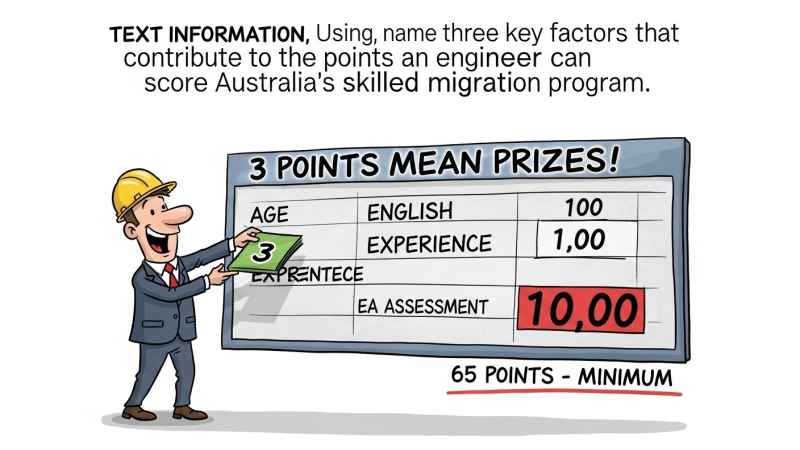
Calculate Your Points. Skilled migration is based on a points test (minimum 65 points to be invited). Points come from factors like age, education, English, work experience, and professional employment. While we won’t list the entire points table here, key items include: up to 30 points for prime age (25–32), 15–20 points for higher English (IELTS 7 or 8), 15–20 for extra skilled work experience, 5 points for an Australian degree, and 5–15 for state/territory nomination or regional nomination. Aim to maximize your points, since higher scores improve your chances of an invitation. (For example, visa guidelines typically allocate 20 points for IELTS 8.0). You may use online calculators or refer to Home Affairs documentation to confirm your score. This point calculation will be included in your EOI (next step).
-
Submit an Expression of Interest (EOI). Once you have your positive skills assessment and test results you lodge an EOI via the SkillSelect system (the Department of Home Affairs portal for skilled migration). You provide details of your qualifications experience test scores and calculated points. The system will rank your profile against others.
No documentation is attached at this stage – just the facts.
A key tip is to be precise with your occupation code and points. You can update your EOI as needed (e.g. after gaining work experience or a higher test score). If your score is high enough and your occupation in demand, you may receive an Invitation to Apply (ITA) for a visa within a few months.
-
Lodge the Visa Application. After getting an invitation you have a limited time (usually 60 days) to apply online for the visa. This is done on the Department of Home Affairs portal. You will upload all required documents and pay the visa fees. Required documents include your passport qualification certificates detailed CV or employment references English test results
and the positive skills assessment letter from EA.
You may also need identity documents (birth certificate, ID), police clearance certificates, and health examination reports. The visa application is finalized once you submit everything and pay the fee. Then begins the waiting period for approval, which can vary by visa and personal circumstances (see FAQ below for typical timelines).
Documents Required
Accurate paperwork is crucial. Along with forms, you typically need:
-
Passport and Identification: A clear copy of your valid passport and photo ID (driver’s license or national ID).
-
Academic Qualifications: Certified copies of your degree(s), transcripts, and any relevant professional credentials.
-
English Test Results: Scores for IELTS, TOEFL iBT, PTE, etc., meeting the visa’s minimum requirement.
-
Curriculum Vitae (CV): A detailed resume outlining your education and engineering work history.
-
Competency Demonstration Report (if applicable): If you followed the CDR pathway, include the report you submitted to Engineers Australia.
-
Cover Letters or Statements: Any required cover letters (e.g. cover note explaining documents) as per visa guidelines.
-
Expression of Interest Evidence: A screenshot or reference number confirming your EOI submission.
-
Police Clearance: Certificates or clearances from each country you’ve lived in (usually last 10 years).
-
Health Examination: Form 26 or equivalent medical check results from an approved panel doctor.
All documents not in English must be translated by a certified translator. Engineers Australia’s own guidance (the Migration Skills Assessment Booklet) emphasizes that Section C of the CDR pack includes your Continuing Professional Development (CPD) list, three career episodes, and a summary statement (https://www.engineersaustralia.org.au).
(The CPD is a one-page list of courses, workshops, etc., you have completed.) Meanwhile, the Department of Home Affairs expects the above personal documents for the visa application. In practice, it’s wise to prepare and verify every required document well before you lodge the visa, to avoid delays.
Understanding the Competency Demonstration Report (CDR)
If your engineering degree is not recognized under the Washington, Sydney, or Dublin Accords, you must use the CDR pathway for your skills assessment (https://www.engineersaustralia.org.au). The CDR is a detailed self-evaluation showing how you meet the Australian competency standards. It consists of:
-
Three Career Episodes: Each episode is a short report (1000–2500 words) on a distinct project or period of work you performed. You write it in the first person focusing on your role and contributions. The Engineers Australia guide explains that each episode should cover a particular project or task outlining the problem the engineering methods used
and how you solved problems ( https://www.engineersaustralia.org.au ). Essentially it is an evidence-based story of your engineering practice.
-
Summary Statement: This is a mapping document that ties your Career Episodes to Engineers Australia’s competency elements. It’s typically a table where you highlight paragraphs in your episodes and indicate which competency item each demonstrates.
-
Continuing Professional Development (CPD): A concise list of any formal or informal activities you’ve done to maintain or upgrade your skills. This can include courses workshops conferences papers written memberships etc. The official MSA booklet states that “all relevant CPD must be included” in list format (with title date
duration) and should not exceed one A4 page ( https://www.engineersaustralia.org.au ). This shows the assessor that you actively engage with professional learning.
To summarize Engineers Australia requires all three components – Career Episodes Summary Statement and CPD list – for a CDR assessment ( https://www.engineersaustralia.org.au ). Your submission should also include your resume passport details and academic transcripts. The writing must be original and in English; copying from others or including large verbatim technical content is prohibited. In short
the CDR is one of the most challenging parts of migration for many engineers but it is critical to demonstrate competency for a positive skills assessment .
Points Test Overview
Skilled migration is competitive and based on points. You’ll need at least 65 points to claim for an invitation under most visas. Points come from various categories: age English education level skilled employment Australian study and nominations. Key examples: engineers gain 30 points if aged 25–32 20 points for superior English (IELTS 8.0 or equivalent)
10 points for proficient English (IELTS 7.0) 5 points if they hold a 2–3 year Australian university degree and additional points for state or regional nomination (typically 5 or 15).
To illustrate the VisaEnvoy guide shows that “Most Skilled Migration visas (189 190 491 494) require Competent English (IELTS 6) – 0 points – or higher” and grants extra points for higher scores. While we won’t reproduce the full table here keep in mind: very good English and a youthful age bracket give a large chunk of points.
You can refer to official points tables on the Home Affairs website to calculate your exact score.
Remember, an invitation to apply usually goes to the highest-scoring candidates, so aim to maximize each category (e.g. consider a PTE score of 79+ or IELTS 8 for 20 extra points).
Common Mistakes to Avoid

Migration applications can be complex. Some pitfalls to watch out for include:
-
Plagiarized or Incorrect CDR: Submitting a copied or generic CDR will lead to refusal. Ensure your Career Episodes are 100% original, personal, and aligned with EA’s guidelines.
-
Insufficient English Scores: Don’t overestimate your ability; if you miss the minimum bands on IELTS/TOEFL, your visa won’t be granted.
-
Incomplete CV or Documents: Every work experience claimed must have evidence. A resume missing relevant job details or outdated education certificates can derail your application.
-
Wrong Points Calculation: Double-check each points category. A miscalculation (or forgetting to count partner skills, Australian education, etc.) could cost you an invite.
-
Missing Deadlines: After receiving an invitation, you have a strict deadline (usually 60 days) to lodge the visa application. Late submissions are not accepted.
-
Incorrect ANZSCO Code: Carefully choose the code that best matches your role. Picking the wrong occupation (even one off by a digit) could invalidate your EOI or skill assessment.
Avoid these by thorough preparation and, if possible, peer reviews. Many applicants find it helpful to use professional review services to catch any gaps. (For instance, some migration agencies offer free plagiarism reports on CDR drafts to ensure originality.) In general, attention to detail and double-checking every form will improve your chances.
Frequently Asked Questions
Do I need to write a CDR?
If your engineering degree is not accredited under the Washington Sydney or Dublin Accords then yes – a CDR is required as part of the Engineers Australia skills assessment ( https://www.engineersaustralia.org.au ). Accredited degrees (e.g. from certain US UK Australian universities) may be recognized directly without a CDR
but check EA’s list of accredited programs to be sure.
Can I apply before I have work experience?
Yes, you can lodge an EOI with minimal or no post-qualification experience, but you’ll have fewer points. Recent graduates are welcome, but note that points are awarded for years of work. As your career progresses, you can update your EOI to increase points.
How long does the process take?
Overall processing can range widely. In practice including assessment by Engineers Australia and visa approval it often takes about 6 to 12 months. For context Engineers Australia states that a standard skills assessment application takes roughly 15 weeks just to reach an assessor ( https://www.engineersaustralia.org.au ). After that
Home Affairs processing time depends on visa subclass and applicant volume. It is wise to start early and allow at least one year for the entire process.
Can I include my academic projects in the CDR?
Absolutely. Especially for recent graduates, a Career Episode can be based on a major university project or thesis. Just ensure you clearly explain your personal contribution to the project, as EA requires a first-person account of what you did (https://www.engineersaustralia.org.au).
How long is a skills assessment valid for?
Once Engineers Australia grants a positive assessment the outcome letter itself does not expire on EA’s side ( https://www.engineersaustralia.org.au ). However for visa purposes check Home Affairs rules: some visas may require that the skills assessment be no older than 3 years at time of application. In general
plan to use your skills assessment within a few years to avoid any doubt.
Conclusion
Skilled migration to Australia for engineers is a proven path to a rewarding career. The process is detailed but straightforward: have your skills checked by Engineers Australia meet the points and English criteria and then apply under a suitable visa. Each step demands attention — from writing a compelling compliant CDR to calculating points correctly.
Rigorously preparing all documentation is vital. By carefully following the steps above you can maximize your chance of a successful application.
Many engineers worldwide (from India, Pakistan, Bangladesh, Nepal, the UAE, etc.) have used this route to pursue their career dreams in Australia.
For the most up-to-date information always refer to the official sites: the Engineers Australia migration pages ( https://www.engineersaustralia.org.au ) and the Home Affairs skilled migration pages ( https://immi.homeaffairs.gov.au ). With thorough preparation (and possibly professional guidance if needed)
a positive skills assessmen t and skilled visa can open the door to life and work in Australia’s dynamic engineering sector.
Skilled Migration Engineers Australia review checklist for 2026
Skilled Migration Engineers Australia should be checked against the latest Engineers Australia assessment expectations. A practical Skilled Migration Engineers Australia review confirms that the applicant has used real engineering evidence. The final Skilled Migration Engineers Australia draft should explain personal responsibility, technical decisions, and project outcomes. Applicants preparing Skilled Migration Engineers Australia should avoid vague claims and keep the report evidence based. A clear Skilled Migration Engineers Australia structure helps the assessor follow the project from problem to result.
Before upload, Skilled Migration Engineers Australia should be reviewed for grammar, formatting, originality, and consistency. Strong Skilled Migration Engineers Australia preparation connects project evidence with the nominated engineering occupation. Professional Skilled Migration Engineers Australia support should improve clarity without changing the applicant’s facts. Every Skilled Migration Engineers Australia section should support the migration skills assessment pathway clearly. A complete Skilled Migration Engineers Australia review can reduce delays caused by missing or unclear information.
Skilled Migration Engineers Australia should be checked against the latest Engineers Australia assessment expectations. A practical Skilled Migration Engineers Australia review confirms that the applicant has used real engineering evidence. The final Skilled Migration Engineers Australia draft should explain personal responsibility, technical decisions, and project outcomes. Applicants preparing Skilled Migration Engineers Australia should avoid vague claims and keep the report evidence based.
Related reading
- Start with how the EA skills assessment works from start to finish.
- See also why Engineers Australia is the assessing authority for engineers.
- Related: the Engineers Australia skill assessment process.
- Background: the complete Engineers Australia CDR guide.
- Next step: compare our CDR plans and pricing.
- Also useful: CDR samples by engineering discipline.
- Worth a look: estimate your skilled migration points.
- See also: the ACT Canberra Matrix calculator (190 and 491).