
Engineers Australia Skill Assessment CDR is covered in this guide for Engineers Australia applicants. If you’re a professional engineer aspiring to move to Australia, one of the most critical hurdles is the Engineers Australia Skill Assessment CDR process. Engineers Australia (often abbreviated as EA) is the designated authority that evaluates the skills and qualifications of engineers seeking skilled migration to Australia.
In this guide, we’ll walk you through every step of preparing and submitting your Competency Demonstration Report (CDR) – the core of the EA skill assessment for engineers. We’ll cover what the CDR involves, how to ensure it meets Engineers Australia’s guidelines, and tips to boost your chances of a successful outcome.
Whether you’re new to the EA Skill Assessment process or looking to refine your CDR Skill Assessment submission, this friendly, step-by-step guide will help you navigate the requirements with confidence.
What Is the Engineers Australia Skill Assessment and Who Needs a CDR?
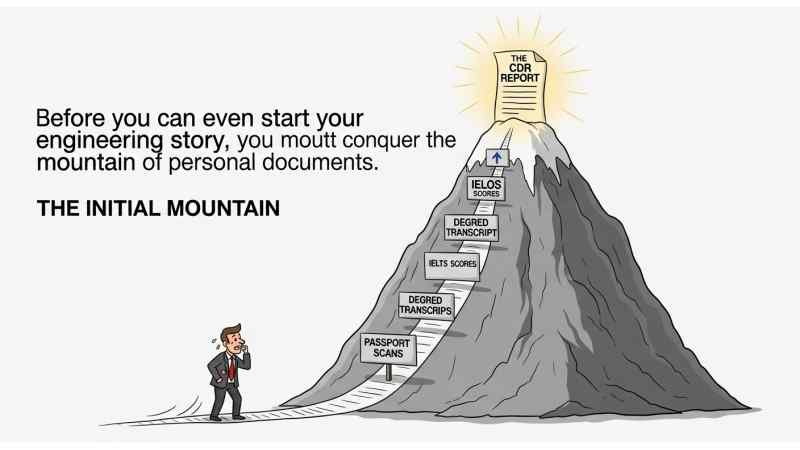
Engineers Australia (EA) is the professional body responsible for assessing engineering qualifications and experience for Australia’s immigration Skilled Migration program. If you plan to apply for a skilled visa (such as subclass 189, 190, or 491), a positive skills assessment from EA is mandatory. The EA assessment ensures your engineering skills and knowledge meet Australian standards before you can work as an engineer in Australia.
There are different pathways for an EA skills assessment depending on your education:
-
Accredited Qualifications Pathways: If you have an engineering degree from Australia or from a country part of the Washington Accord (for professional engineers), Sydney Accord (for technologists), or Dublin Accord (for associates), your degree is recognized and you can follow an accredited qualifications pathway (no CDR required).
-
Non-Accredited Qualifications Pathway (CDR): If your qualifications are not recognized by those accords – for example, you studied in a country or institution that isn’t accredited – you must go through the Competency Demonstration Report (CDR) pathway.
In other words, the CDR is required for engineers whose academic degrees are not formally accredited or who are from countries not covered under the international agreements. It’s also needed if you’re seeking assessment in a different engineering occupation than your degree, or if you’re an overseas engineering graduate with no recognized accreditation.
In summary, the CDR is a detailed technical report that you prepare to prove to Engineers Australia that you have the skills and competencies equivalent to an Australian-qualified engineer. Think of it as your chance to demonstrate your engineering competency in lieu of an approved degree. Without a positive outcome on your CDR-based assessment, your skilled visa application cannot proceed.
Understanding the Competency Demonstration Report (CDR)
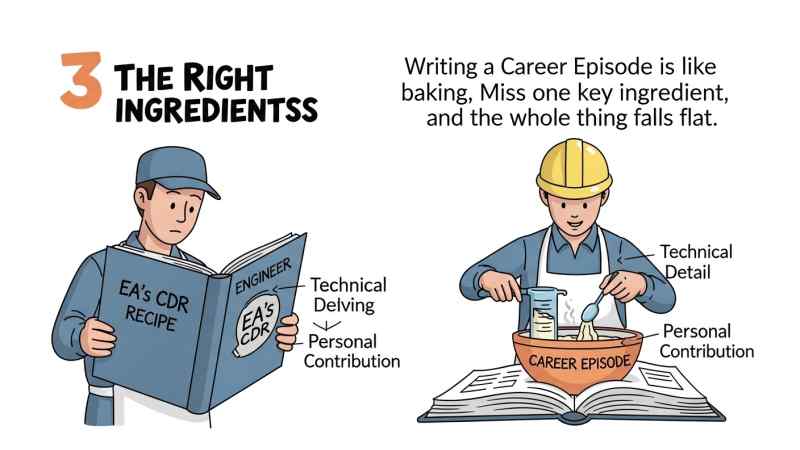
A Competency Demonstration Report is not just one document, but a package of documents and narratives that together showcase your engineering education and experience. The CDR allows you to highlight your technical expertise, problem-solving skills, and professional accomplishments in engineering.
According to Engineers Australia guidelines, a complete CDR application includes several components:
-
Personal and Identification Documents: This includes a passport-style photograph and identity documents (e.g. passport bio-data page). If your current name is different from the name on your academic documents, you must provide evidence of name change (such as a marriage certificate or affidavit). You’ll also need to supply your curriculum vitae (CV), which should be a full summary of your engineering education and work history.
Engineers Australia expects a CV of up to about three pages, detailing your roles, responsibilities, and dates of employment for each position. Additionally, you must provide proof of English language competency, usually an IELTS, TOEFL iBT, or PTE Academic test result (taken within the last 2 years) unless you are exempt by being a native English speaker or holding certain qualifications.
(For example, EA typically requires at least IELTS 6.0 in each band or equivalent TOEFL/PTE scores as the minimum to demonstrate “competent” English.)
-
Application Form: Engineers Australia uses an online application system. You will need to register for an account (get an EA ID) and fill out the Migration Skills Assessment application via their portal. In this form, you’ll declare your personal details and select your engineering occupation category for assessment (more on choosing the right category later). You’ll also upload all documents through this online portal.
-
Education Credentials: You must provide evidence of your academic qualifications, including degree certificates and academic transcripts for any tertiary engineering qualifications you have. If the documents are not in English, certified translations must be provided. If you are currently enrolled in a program or awaiting graduation, include proof of enrollment or provisional results.
-
Employment Evidence (if applicable): While not mandatory for a CDR if you are only getting your qualifications assessed, if you want to have your work experience considered (for example, to claim points or demonstrate relevant engineering experience), you should include employment reference letters or experience certificates from your employers. These should detail your job title, duties, and the duration of your employment. Non-English letters should be translated.
Note that work experience can bolster your CDR narratives but Engineers Australia will primarily assess your competencies through the Career Episodes, not just via reference letters.
-
The CDR Report Itself: This is the heart of your submission. The report comprises three main parts:
-
Continuing Professional Development (CPD) List: A list of all the professional development activities you have undertaken to keep your skills current. This typically includes workshops, short courses, training seminars, conferences, webinars, professional memberships or licenses, and any self-study or research you’ve done. The CPD should be presented in list format (preferably chronologically) with dates, the name of the course or activity, the provider or location, and a brief description.
Keep it concise – EA suggests limiting the CPD listing to one A4 page. The CPD demonstrates that you are actively engaged in learning and staying up-to-date in your field.
-
Three Career Episodes: These are three separate essay-style narratives, each focusing on a specific project or period of your engineering education or work experience. In each Career Episode (CE), you will describe how you applied your engineering knowledge and skills in a particular situation. We’ll discuss detailed guidelines for writing Career Episodes in the next section.
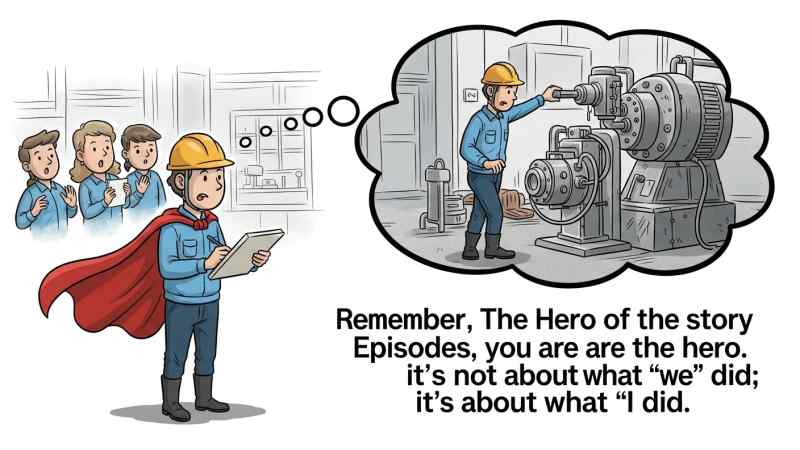
Each episode must be written in first person (using “I” – e.g., “I designed a solution…”) and highlight your personal role and contributions, not just what the team or project as a whole achieved. Engineers Australia wants to assess your competency, so it’s crucial to clearly state what you did, why you did it, and how you did it in each narrative.
Each Career Episode should be between about 1,000 to 2,500 words in length, and each one should cover a different project or aspect of your experience (to show breadth of experience).
-
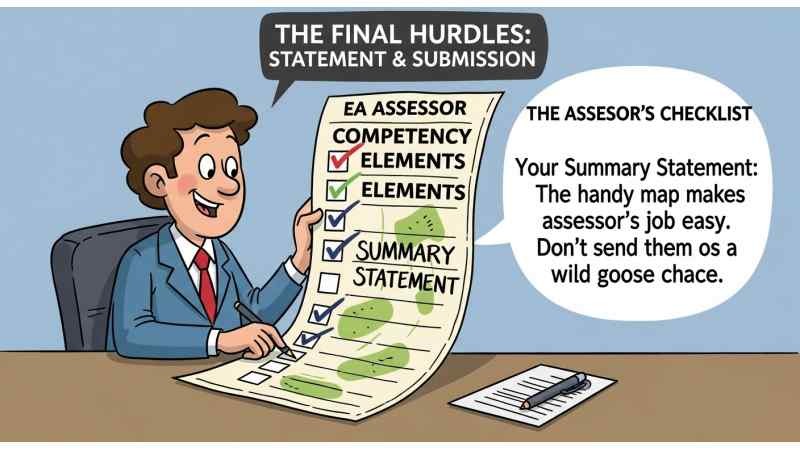
Summary Statement: After writing the three episodes, you must create a Summary Statement document. This is essentially a table or list where you map the competency elements required by Engineers Australia to specific paragraphs in your Career Episodes. Engineers Australia provides templates for the Summary Statement for each occupational category (Professional Engineer, Engineering Technologist, etc.).
In the summary statement, you will take each competency element (for example, “PE1.2 – Application of ethical principles” or “PE2.4 – Problem solving skills” for Professional Engineer) and pinpoint where in your episodes you demonstrated that element.
You’ll need to reference the exact episode and paragraph number (this is why it’s important to number the paragraphs in your Career Episodes, e.g., CE1: 1.1, 1.2, 1.3…, CE2: 2.1, 2.2…, etc.). A well-done Summary Statement provides a clear checklist for the assessor to see that you have covered all required competencies, so it must be accurate and concise. We’ll touch more on this below.
-
In essence, the CDR is your portfolio to prove you are an engineer who can meet Australian standards. It’s not just about writing a long essay – it’s about providing structured evidence of your engineering problem-solving, technical design abilities, and professional development.
Engineers Australia CDR Guidelines: How to Prepare Each Section of Your CDR
Engineers Australia has strict guidelines for how your CDR should be written and formatted. Let’s break down each major part of the CDR in detail and go over the key Engineers Australia CDR requirements you must follow:
1. Writing Effective Career Episodes
The Career Episodes are the most significant parts of your CDR. Each Career Episode is a narrative that focuses on a specific instance in your engineering background – it could be a project you worked on, a significant task or problem you solved at work, a piece of research or thesis project, or even a noteworthy engineering challenge from your university days. The purpose of each episode is to highlight how you applied your engineering knowledge and skills in that situation, and how you personally contributed to the outcomes.
Key points to follow for Career Episodes:
-
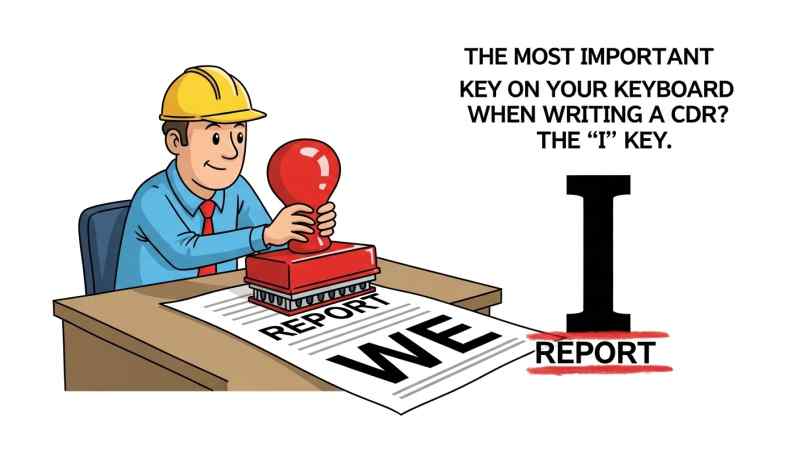
Write in the First Person: Always write from your perspective using “I”. For example, say “I calculated the load requirements and designed the beam accordingly,” not “The team designed the beam”. The assessor needs to see your personal contribution. A good rule is to imagine you’re telling a story about your own actions. Phrases like “I designed…”, “I investigated…”, “I led the team in…” make it clear what you did. Avoid generic statements or too many passive phrases. Remember, “it’s about what I did, not what we did,” as EA’s instructions emphasize.
-
Structure Each Episode Clearly: Engineers Australia suggests a clear structure for each Career Episode, which typically includes:
-
Introduction: About 100 words. State the basic context: the period (dates and duration) of the project/experience, the location (company and country, if applicable), the title of your position at the time, and the project name. This sets the scene. For example: “This episode describes my experience as a Structural Engineer at XYZ Consultants during June 2022 – August 2023, where I worked on the ABC Building Project in Dubai as a Design Engineer.”
-
Background: 200–500 words of background. Provide context about the project or task: what was the overall project about? What were the objectives or requirements? What was the organizational structure or your team like? And crucially, what was your role in that context? You might describe the company or department you were in, how the project came about, and your specific duties. This helps the reader understand the significance of the project and where you fit in.
-
Personal Engineering Activity: This is the main body (typically 500–1000+ words). Here you detail what you actually did in this episode. Focus on technical details and problem-solving: talk about tasks you handled, challenges or problems encountered, how you applied engineering principles to address them, any design calculations or analysis you performed, important decisions you made, and how you worked with others (if applicable). Emphasize your own decision-making and technical contributions.
For instance, if the project was designing a water treatment system, you might describe how you performed the capacity calculations, chose specific processes or equipment, and perhaps how you mitigated a particular issue (like cost constraints or site limitations). Include any important tools or standards you used (software, codes, etc.), as this shows your hands-on skills.
You should also mention the outcome or results of your work – e.g., “the design I developed was approved by the client and is now implemented, achieving a 20% improvement in efficiency.” Make sure to highlight any instances where you demonstrated innovation, teamwork, or leadership as well.
-
Tip: It’s good to include at least a couple of specific problems you solved in each episode, and how you solved them. For example, describe an engineering problem or calculation that was challenging and what solution you came up with. This showcases your critical thinking.
-
While technical detail is important, avoid overly lengthy theoretical discussions or inserting large tables of data. The assessors are more interested in analysis and decision-making rather than raw data. Don’t turn your episode into a pure technical report; keep it narrative and focus on your reasoning and actions.
-
Summary: About 50–100 words wrapping up the episode. Summarize the project and the outcomes, and reiterate how your role contributed to the success of the project or what you learned. For example: “In summary, this project enhanced my understanding of HVAC system design – I successfully designed and implemented a cost-effective ventilation solution, and our team delivered the project on time meeting all specifications. This experience strengthened my skills in thermal analysis and project management.”
Each Career Episode should be presented as a continuous essay (no tables or bullet lists within the narrative), and written in chronological order (the story should flow from start to finish of that experience).
Also, remember to number the paragraphs in each episode. Engineers Australia requires you to number your paragraphs (for example, 1.1, 1.2, 1.3… for the first episode; 2.1, 2.2… for the second; and 3.x for the third). This numbering will be used in your Summary Statement to refer back to specific points in your episodes.
Choosing Topics for Career Episodes: Ideally, pick three different experiences that show different facets of your engineering competencies. For instance, you might choose one project that highlights your design skills, another that shows your project management or leadership abilities, and another that emphasizes research or analysis skills. Possible sources for episodes include:
-
A university final year project or thesis (great for recent graduates).
-
A significant project at work where you had a key role.
-
An engineering problem you solved, or a design you created.
-
Participation in a major research or R&D effort.
-
Even a noteworthy engineering challenge from extracurricular or volunteer work, if it’s relevant.
Make sure each episode aligns with the occupational category you are applying for. For example, if you are aiming for the Professional Engineer category, your episodes should demonstrate complex problem solving, system integration, and leadership in engineering tasks. If you’re applying as an Engineering Technologist, the scope might be slightly more applied and narrow, but still needing problem-solving and technical expertise. Using the correct terminology and scope for your category helps.
Also, each episode should ideally correspond to the competencies listed for that category (which you will explicitly link in the Summary Statement).
2. The Summary Statement: Mapping Your Competencies
The Summary Statement is a crucial component of your CDR that often confuses applicants. In simple terms, the summary statement is a single-page (usually) document where you provide a checklist of how each required competency element was addressed in your Career Episodes.
Engineers Australia provides a list of competency elements for each category in their Migration Skills Assessment booklet and also offers a template format for the summary statement. For example, for the Professional Engineer category, the elements are grouped under headings like Knowledge Base, Engineering Application Ability, and Professional and Personal Attributes (these correspond to Stage 1 competency standards).
How to prepare your Summary Statement:
-
Download the appropriate template or refer to the example given by Engineers Australia for your category. It typically has a table where the first column lists the competency element (e.g., “PE1.1 – Comprehensive knowledge of the physical sciences and engineering fundamentals”), the second column asks for a brief explanation of how you demonstrated it, and the third column is where you reference the paragraphs in your episodes.
-
Go through each of your three Career Episodes and identify where you have demonstrated each competency. This requires some analysis. A good approach is to mark up your episodes after writing them: note which paragraph shows you applying engineering knowledge, which paragraph shows you doing design, which one shows problem-solving, which shows teamwork or ethical considerations, and so on.
-
In the Summary Statement table, for each competency element:
-
Provide a concise explanation or claim about how you have demonstrated that competency. For instance, for “PE2.3 – Application of systematic engineering synthesis and design processes”, you might write something like: “Developed and evaluated multiple design options for a bridge project and selected the optimal solution considering safety and cost (see CE2, paragraph 2.5)”.
-
Then, cite the specific paragraphs from your episodes that support that claim, in parentheses. Using the example above, you would list “CE2 2.4–2.6” if, say, in Career Episode 2, paragraphs 2.4 to 2.6 cover the design process you’re referring to.
-
-
Ensure every required element has at least one reference from your stories. Some paragraphs in your episodes might serve to demonstrate multiple competencies – that’s fine, just reference them wherever relevant. Conversely, if you find an element that none of your episodes address, you might need to tweak your episodes or choose a different experience to include.
-
Be clear and specific. The assessor should not have to guess where or how you meet a competency. The summary statement should essentially serve as an index to your evidence. Avoid writing long paragraphs here – bullet points or very short explanations are sufficient as long as the references are clear. For example: “PE1.2: Demonstrated knowledge of structural engineering principles by performing earthquake load calculations (CE1 1.5, 1.6)”.
-
Double-check that the numbering in your Summary Statement corresponds exactly to the numbered paragraphs in your Career Episodes. Inconsistencies here can confuse assessors and may lead to a negative outcome if they think you didn’t cover a certain competency due to a referencing error.
The summary statement may seem tedious, but it forces you to verify that your CDR as a whole covers all the competencies Engineers Australia expects to see in a competent engineer of your category. Take your time to get it right – it’s usually the first thing assessors look at to get an overview of your application.
3. The Continuing Professional Development (CPD) List
Your CPD statement is typically the easiest part of the CDR, but it’s still important. Engineers Australia wants to see that you have been actively maintaining and upgrading your skills. In your CPD, list all relevant professional development activities since graduation (you don’t need to include things from your school days, focus on after you became an engineer).
What to include in CPD:
-
Formal education: Postgraduate degrees or courses, if any.
-
Short courses or workshops: Technical courses, management training, webinars, etc.
-
Conferences and seminars: Engineering conferences or technical seminars you attended (especially if you presented or contributed).
-
Certifications or professional exams: If you earned an engineering license, certification, or completed significant training (for example, Project Management Professional, specific software certifications, etc.).
-
Technical papers or research: If you authored or co-authored any papers, or even significant technical articles.
-
Self-study: Include things like online courses (e.g., Coursera, Udemy), or even reading technical journals, if relevant – but don’t overdo it; stick to meaningful learning activities.
Each entry in the CPD list should have at minimum: date, activity name, and a brief description. For example: “Jan–Feb 2023: Completed a 6-week online course on Sustainable Energy Systems (institution: ABC Institute) – learned advanced concepts of solar and wind energy integration.” Or “June 2021: Attended the IEEE International Conference on Robotics in Sydney – gained insights on the latest in automation and AI.”
There’s no need to provide certificates for CPD activities with your application; the list itself is sufficient evidence. However, everything you list should be truthful and you should have documents on hand just in case they ever asked (they usually don’t, but honesty is the best policy).
Keep the CPD list to a one-page maximum. Bullet points or a table format is acceptable. The key is showing you’re committed to lifelong learning as an engineer.
4. Formatting, Language, and Presentation Tips
Following the correct format is more important than many candidates realize. Engineers Australia provides clear instructions in the MSA (Migration Skills Assessment) booklet about formatting. Here are some tips to ensure you meet those expectations:
-
Language: The entire CDR must be written in English. Use clear, professional language and avoid jargon that might not be commonly understood. At the same time, do use technical terms appropriately for your field – you want to show you know your stuff. If English isn’t your first language, have someone proficient proofread your writing.
Grammar and clarity matter – a CDR riddled with grammatical errors or confusing sentences can create a negative impression about your communication skills. Remember, one reason EA asks for this extensive report is also to gauge your ability to communicate effectively in English in a professional context.
-
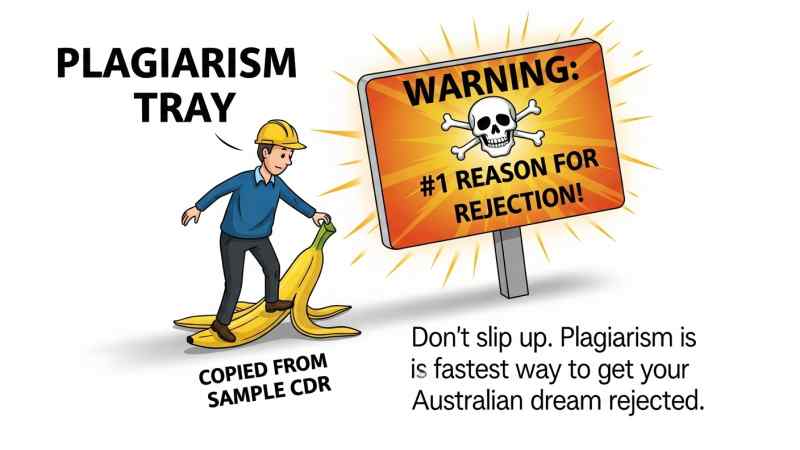
Originality: Plagiarism is strictly forbidden. You must write everything in your own words. Do not copy any content from sample CDRs you find online or from colleagues. Engineers Australia uses advanced plagiarism detection software on all submissions. If you plagiarize, your application will likely be rejected immediately and you could face a ban from reapplying for a significant time.
It’s fine to refer to guidelines or examples for understanding, but when writing, ensure the narrative truly reflects your personal experience and is written by you. Even self-plagiarism (reusing text from your own earlier CDR if you’re reapplying) can be an issue – always rephrase and ideally bring in new details.
-
Document format: All documents should be typed (of course) and preferably in a simple font like Arial or Times New Roman, 11 or 12 pt. Follow any specific formatting rules from EA – for instance, they require that Career Episodes be written as essays (no tables). Use headings in your Career Episodes (Introduction, Background, etc.) to help structure them, but in the final PDF you submit, it’s all continuous text.
Number the pages of your documents, and make sure each part of the CDR is clearly labeled (you can have separate documents or one combined PDF, but it should be organized – e.g., have a cover page or section title for each Career Episode, etc., if in one file).
-
Length: Adhere to the recommended lengths for each section. Career Episodes too short might not sufficiently demonstrate competencies; too long and you risk including irrelevant material (or testing the assessor’s patience). EA gives 1,000–2,500 words as the acceptable range per episode. It’s wise to stay comfortably within that. The Summary Statement is usually 1-2 pages at most (since it’s just a mapping). The CPD, as mentioned, should be one page.
-
Ethical compliance: When you apply, you’ll agree to a declaration that the report is all your own work and factual. Do not be tempted to exaggerate or fabricate any experience. Engineers Australia may request verification or an interview if something seems inconsistent. Stick to the truth, and just present it in the best possible light.
By following these guidelines in writing your CDR, you not only meet the formal requirements (CDR format Engineers Australia expects) but also create a compelling case for your engineering competency.
Step-by-Step: How to Apply for the Engineers Australia Migration Skills Assessment (CDR Pathway)
Once your CDR is ready, the next part is submitting it to Engineers Australia for the Migration Skills Assessment (MSA). Here’s a quick rundown of the process to apply skill assessment Engineers Australia using the CDR pathway:
Step 1: Choose the Correct Occupational Category
Engineers Australia recognizes four occupational categories for assessment: Professional Engineer, Engineering Technologist, Engineering Associate, and Engineering Manager. It’s crucial to nominate the category that matches your qualifications and the role you intend to work in. Generally:
-
Professional Engineer: For those with a 4-year bachelor’s degree in engineering (or higher) and who work in broad, complex engineering problems and systems integration.
-
Engineering Technologist: Usually requires a 3-year engineering technology degree, focusing on a more applied, specific technological area.
-
Engineering Associate: Usually a 2-year diploma or associate degree, focusing on practical implementation and support in engineering.
-
Engineering Manager: For those who have moved into management of engineering operations (often requires an engineering degree plus management experience).
Pick the category that best fits your academic level and experience. This will determine which competency elements you need to demonstrate. For example, if you are an engineering graduate with a 4-year degree, you’d typically go for Professional Engineer. If you choose Engineering Manager, note that EA treats it as a separate category (not a technical engineering occupation but a management role).
Choose carefully because an incorrect category could lead to assessment failure or an outcome that doesn’t benefit your visa goals. (If unsure, read EA’s descriptions of each category in their booklet or seek advice.)
Step 2: Create an EA Account and Start Your Application
Go to the Engineers Australia Migration Skills Assessment portal and register for an account. You’ll get an EA ID (number) which you will use for the application and all correspondence. After verifying your email and logging in, you can start a new Migration Skills Assessment application. The online form will ask for details like:
-
Personal information (name, date of birth, country of citizenship, etc.).
-
Education history (institutions, degrees, graduation dates).
-
The occupational category and engineering occupation you are applying for. Note: Under the CDR pathway, you also have to select a specific occupation from EA’s list of 31 recognized engineering roles (e.g., Civil Engineer, Mechanical Engineer, etc.). Choose the one that aligns with your background – usually your degree major or the field of your work experience.
-
English language test details (you may need to enter your test type and scores).
There will be sections to upload your documents: identification, degree certificates, transcripts, CV, English test report, etc., and your CDR (which can be a single PDF containing CPD, three episodes, summary statement – or separate uploads as the system allows).
Make sure you fill in everything accurately. Any misrepresentation can cause problems. Double-check the spellings and dates against your documents.
Step 3: Upload Your CDR and Supporting Documents
Before uploading, scan all documents clearly (passport, degrees, transcripts, etc.). Engineers Australia accepts scans of original documents, but if they are not in English, include scanned translations by a certified translator. For the CDR, you will typically upload:
-
Your Continuing Professional Development list (often they have a slot for CPD).
-
Each Career Episode (some applicants upload them as separate files labeled CE1, CE2, CE3, plus Summary Statement; others combine into one big PDF – follow the instructions on the portal).
-
The Summary Statement.
Ensure the file format and size meet EA’s requirements (usually PDF is preferred and each file under certain MB limit). It’s a good idea to do a final review of all your CDR content at this point – make sure pages are not missing, the format looks okay, and so on, because this is exactly what the assessor will see.
Step 4: Pay the Fee and Submit the Application
Engineers Australia charges a fee for the Migration Skills Assessment. The fee can vary depending on whether you are applying as an member of Engineers Australia or not, and additional services like fast-tracking. As of 2025, the standard assessment fee for non-members is in the order of a few hundred Australian dollars (often around AUD $500–$600, but check current rates).
If you opt for a Fast Track service (to expedite the process by assigning an assessor quickly), there is an additional fee (roughly ~AUD $300–$400 extra). Fast Track can significantly reduce waiting time (more on that next).
When you have filled everything out, the portal will direct you to payment. Pay the fee online (credit card usually). Once paid and submitted, you should receive a confirmation email that your application has been submitted successfully.
Step 5: Wait for the Assessment Outcome
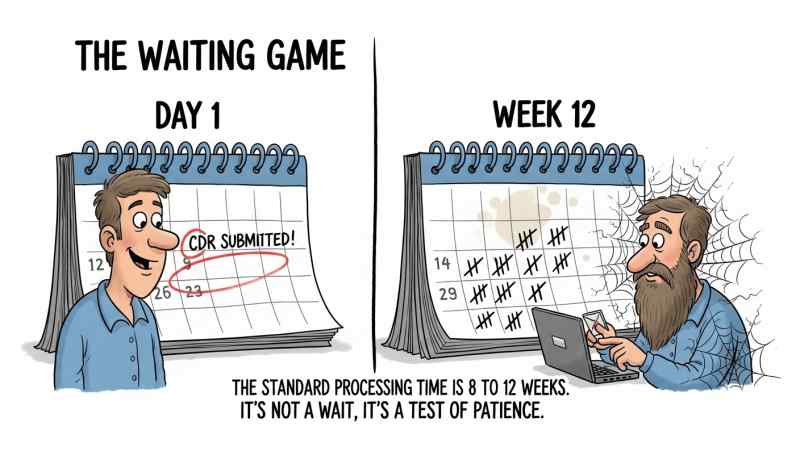
Now comes the patience part. For a standard CDR-based assessment, the processing time can be a few months. Engineers Australia’s typical processing time (standard route) is advertised as about 8 to 12 weeks for most cases. However, this can vary depending on how busy they are and the quality of your application.
In practice, it might take around 3 months to get assigned to an assessor and potentially a few more weeks to get the result, so don’t panic if it stretches a bit. You can check EA’s website for updated average processing times – in recent updates they indicated about 15 weeks to assign an assessor for standard applications (so roughly that timeframe to start processing).
If you paid for the Fast Track service, your application will be placed in a priority queue. Fast Track assessments are often processed in about 20 business days (4 weeks) or so for assignment to an assessor, with the outcome potentially coming soon after review. Fast Track is useful if you’re in a hurry, but remember it doesn’t guarantee a positive outcome – your CDR still needs to be up to standard.
During the waiting period, Engineers Australia might contact you for additional information if something was missing or unclear. For example, they might request verification of documents (like asking you to have your documents certified, if not already), or a more legible copy of a transcript, etc. Respond to any such requests promptly to avoid further delay.
Once the assessment is complete, you will receive an outcome letter via email (and/or in the portal). If positive, the letter will state that your skills have been assessed as suitable, and it will mention your occupational category and the specific ANZSCO occupation for which you are assessed. This is the letter you’ll use for your visa application. If the outcome is negative, the letter will explain the reasons.
Pro Tip: While waiting, prepare other aspects of your visa application (like gathering other documents) so you’re ready to lodge the visa once the positive assessment is in hand.
Common Reasons Why CDR Applications Get Rejected
Unfortunately, not all CDR submissions pass on the first try. There are some frequent pitfalls and mistakes that lead to rejection by Engineers Australia. Being aware of these can help you avoid them:
-
Plagiarism or Non-Original Work: This is the number one reason for CDR rejection. Engineers Australia has zero tolerance for copied content. Some applicants make the mistake of copying sample career episodes from the internet or borrowing text from colleagues’ CDRs – this will almost certainly be caught. Even plagiarizing technical content (like theory from textbooks without citing, although citations are not really used in CDRs) can be an issue. Always write your own unique story.
If you use any external material (like a diagram or definition), cite it properly or ideally avoid it. Your CDR should reflect your personal experience, written in your voice.
-
Insufficient Technical Detail or Too Vague: Another common issue is writing Career Episodes that are too generic, lacking concrete details of what you did. For example, simply stating “I worked on designing a bridge and it was successful” is not enough – you need to delve into how you designed it, what challenges you met, what calculations or considerations you made.
If the episodes don’t highlight actual engineering tasks and problem-solving, EA may conclude you haven’t demonstrated the competencies. On the flip side, avoid excessive technical data dumps – including pages of raw results or coding script printouts, etc. Provide a balanced level of detail with context. The assessors should be convinced you know your subject and contributed significantly, but they shouldn’t be overwhelmed with unnecessary minutiae. Aim for clarity and substance.
-
Career Episodes Not Aligned with the Nominated Occupation: If your CDR stories describe work that is unrelated to the occupation you selected, that’s a problem. For instance, if you nominate “Electrical Engineer” but your episodes are all about software programming, EA might find you not suitable for the electrical engineering category. Make sure at least some of the duties in your episodes match the typical responsibilities of your claimed occupation.
This also extends to the occupational category – e.g., if you apply as an Engineering Manager, your episodes should illustrate management of engineering projects/teams, not just technical design work. Misalignment here can lead to a negative result.
-
Poor English and Communication: A CDR with a lot of grammatical errors, unclear sentences, or an unorganized flow can frustrate an assessor. It might give the impression that you lack communication skills or didn’t put in effort. Always proofread multiple times. Use tools like spell-checkers, and consider asking a friend or professional editor to review for clarity. Remember, part of the assessment is that you can communicate your engineering ideas effectively in English.
-
Not Following the Format/Guidelines: This includes things like: not numbering paragraphs, writing career episodes as bullet points or in a table format (instead of essay style), not respecting word count limits, missing a summary statement or CPD, etc. For example, some people have been rejected for “not adhering to Engineers Australia’s format guidelines”, which could be as simple as omitting the summary statement or not numbering the episodes as required.
These may seem like minor issues, but they can cause rejection or a request for resubmission. Follow the official guidelines to the letter. Using the EA-provided checklist (from the MSA Booklet) before submission is a good practice.
-
Lack of Evidence or Documentation: If you fail to provide a necessary document, your assessment can be put on hold or rejected. Commonly overlooked items include missing translations, not providing an English test result, or not attaching the degree certificate (some attach only transcripts, for instance).
Also, if you make claims in your episodes that seem dubious (e.g., claiming an achievement or position that seems very high for your experience level) without any supporting evidence in your documents or CV, the assessor might doubt your credibility. While the CDR is not supposed to include attachments of project reports or designs, the overall application should still be consistent (your CV and reference letters should support the experiences you described, for example).
-
Overuse of Team Language or Unclear Personal Role: If an episode is written such that it’s not clear what you specifically did (“We did this, we did that…” too often), the assessor might conclude that your contribution isn’t demonstrated. They want to see your competencies, so avoid focusing only on the team’s work. It’s fine to set context of team/project, but always zoom into your actions.
In group projects, explicitly state your role and responsibilities. Avoid including things in the story that you were not personally involved in.
-
Incorrect Word Count or Too Many/Less Episodes: Stick to three career episodes. If you submit two or four, that’s not as per guidelines. And ensure each is within the 1000–2500 word range. Submitting a 500-word episode, for instance, likely won’t sufficiently cover the competency elements and could be marked as incomplete.
These are the major reasons. There are others as well, like not signing the self-declaration, but those are procedural. The key takeaway is: be honest, be detailed, follow the rules, and proofread everything. If you do that, you greatly reduce the chances of rejection.
Tips to Boost Your Chances of a Successful EA Skills Assessment
Now that you know what to do and what not to do, here are some extra tips and best practices to make your Engineers Australia skill assessment application shine:
-
Thoroughly Read the Official MSA Booklet: Engineers Australia provides a Migration Skills Assessment booklet (available on their website) which contains all instructions and even examples on how to format your CDR. Before you start writing, read it carefully – especially the sections on CDR preparation. This will give you a clear picture of EA’s expectations. Many successful applicants keep the booklet beside them as a reference while writing, to ensure they cover everything.
-
Plan Your Stories (Career Episodes) Strategically: Choose the three episodes wisely so that together they cover a broad range of your skills. Perhaps one focusing on design, one on analysis, and one on management or leadership (just as an example). This way, you can hit all the competency elements. Also, outline each story before writing. Ensure each has at least one solid example of: problem solving, technical contribution, interaction (team or client), and an engineering outcome. Planning prevents a lot of re-writing later.
-
Focus on your contributions and use active language: We can’t stress this enough – use “I” statements and make yourself the hero of your stories (without exaggeration). Even if the project was a team effort, highlight what tasks you did, what ideas you came up with.
For example, instead of “The team conducted tests to ensure quality,” say “I designed and conducted tests to ensure the product met quality standards, and I coordinated with the lab technicians to implement these tests.” This doesn’t mean you ignore others’ involvement, but the focus should remain on demonstrating your competency.
-
Include Technical Details and Results: Make sure your narratives are technically substantive. Provide at least a few quantitative or specific details: e.g., mention specific values (sizes, capacities, efficiencies), mention the names of software or tools you used, reference engineering standards/codes if applicable (like “designed according to Eurocode 2” etc.). These details lend credibility to your story. Also describe the outcome of your work – did it solve the problem?
By how much did you improve something (percentages, cost savings, time saved)? Providing such results shows the impact of your work, which is very effective.
-
Be Clear and Structured: Use paragraphs wisely. Each paragraph should ideally convey one idea or a step you took. You might even use sub-headings within an episode (like “Design Calculations”, “Testing Phase”, etc.) for your own structuring (though in the final narrative, some keep these headings, some don’t – it’s not strictly required to have subheadings beyond the main four sections, but it won’t hurt to use them if it improves readability).
When describing complex technical work, break it down into simpler terms that a fellow engineer from another discipline could still follow. Remember, the assessor might not be an expert in your exact niche; they could be from any engineering background, so clarity helps.
-
Adhere to Ethical Conduct: This means don’t falsify anything. Also, don’t try to game the system by, say, using someone else’s project as if it were yours. EA can sometimes conduct random audits or ask for interviews if something seems off. Always imagine you could be asked in an interview about any detail you wrote – and write accordingly. If you mention a project, you should know it inside out (since you did it!). Integrity is part of being a professional engineer.
-
Use a Checklist Before Submission: Before hitting submit, run through a final checklist:
-
Do you have all required documents uploaded (ID, degree, transcript, CV, test results, etc.)?
-
Is your CPD attached and complete?
-
Did you include exactly 3 Career Episodes, all numbered and properly formatted, within word limits?
-
Is your Summary Statement done and referencing all competencies correctly?
-
Have you proofread all written sections for language errors?
-
Did you remove any plagiarism and ensure everything is in your own words?
-
Is the application form filled out correctly (correct category, correct personal info)?
-
-
Consider Professional Review (if needed): If you are not confident in your CDR, you might consider using a CDR review service or asking a mentor to look over it. There are professional services (and also many unofficial consultants) who offer to check CDRs for compliance and quality.
Note: Engineers Australia expects the writing to be yours, so if you do get help, it should be in the form of guidance or proofreading, not writing it for you. Hiring someone to write your CDR is risky (it might not reflect your voice, and if discovered, that’s plagiarism/misconduct).
However, getting feedback from someone experienced – for instance, a senior engineer who has gone through the process or a reputable review service – can provide valuable insights. They might catch mistakes you overlooked or suggest improvements in phrasing. Just ensure the final content remains your own.
-
Don’t Rush the Writing: Give yourself ample time to prepare the CDR. Ideally, spread it over a few weeks. Write a draft of a career episode, take a break, review it, refine it, then move to the next. Sometimes ideas of what to include come later. Starting early also allows you to gather any info you need from old projects (for example, digging up an old report to recall details, or confirming figures with a former colleague). A well-thought-out CDR will always trump a hastily written one.
By following these tips, you’ll be well on your way to creating a high-quality CDR that truly represents your capabilities and adheres to Engineers Australia’s expectations.
Conclusion
Undertaking the Engineers Australia skill assessment via the CDR pathway may seem daunting at first, but with careful preparation it can be a rewarding process. Completing a CDR is not just a bureaucratic exercise – it’s an opportunity to reflect on your engineering journey and showcase the value of your expertise. By following the official Engineers Australia CDR guidelines, structuring your Career Episodes thoughtfully, and avoiding common pitfalls like plagiarism or lack of detail, you can significantly improve your chances of a positive assessment.
Remember, the CDR is essentially your engineering story tailored for Australian standards. Make it authentic, make it technical, and make it about you. From the projects you chose to highlight, to the problems you solved, to the lessons you learned – all these will paint a picture for the assessor that you are a competent engineer ready to contribute in Australia.
If you’re ever unsure about any aspect, don’t hesitate to seek clarification – be it from the official EA resources, forums of past applicants, or professional advisors. It’s crucial to get it right the first time, as rejections can cost you time and additional fees. But with the information and tips provided in this guide, you have a solid foundation to build on.
Good luck with your CDR skill assessment journey! With a well-prepared CDR, you’ll be one step closer to achieving your goal of working as an engineer in Australia. Once you pass this hurdle, you can move forward with visa applications and, before you know it, embark on an exciting new chapter of your engineering career down under. Safe travels on your road to success – and happy engineering!
Engineers Australia Skill Assessment CDR checklist for Engineers Australia
A strong application should make the assessor’s job easy. Keep the discussion specific to your nominated occupation, explain your personal engineering contribution, and connect each claim with evidence from your projects, employment documents, CPD records, and career episodes.
- Use the same occupation wording consistently across the CV, CDR, career episodes, and summary statement.
- Explain what you personally designed, calculated, tested, supervised, improved, or solved.
- Support technical claims with project context, tools, standards, constraints, and measurable outcomes.
- Check that the final report follows Engineers Australia guidance before submission.
For related support, see our CDR writing services, sample CDRs for Engineers Australia, and Engineers Australia Skill Assessment guide.
FAQs about Engineers Australia Skill Assessment CDR
Why does Engineers Australia Skill Assessment CDR matter for a CDR?
It helps align your report with the occupation and assessment pathway you are presenting to Engineers Australia. Clear alignment can reduce confusion and make your competency evidence easier to review.
What should I prepare before writing?
Prepare your CV, academic records, employment evidence, CPD list, project notes, calculations, drawings, and any documents that prove your personal engineering role.
Can I use a sample before writing?
Yes. A sample can help you understand structure and tone, but your final report should be written around your own work, decisions, and engineering responsibility.
Engineers Australia Skill Assessment CDR: Best Guide 2026
Engineers Australia Skill Assessment CDR should start with the applicant selecting real engineering evidence instead of generic duties. A strong Engineers Australia Skill Assessment CDR page explains the project context, personal engineering actions, and measurable outcomes. Use Engineers Australia Skill Assessment CDR to connect career episode examples with Engineers Australia competency elements. The best Engineers Australia Skill Assessment CDR preparation keeps claims specific, factual, and supported by documents.
For migration applicants, Engineers Australia Skill Assessment CDR is most useful when it avoids copied samples and focuses on individual work. Engineers Australia Skill Assessment CDR can improve review quality when each project paragraph answers what, why, and how. Before submission, Engineers Australia Skill Assessment CDR should be checked for structure, evidence, language clarity, and consistency. Applicants using Engineers Australia Skill Assessment CDR should keep CPD, summary statement, and career episode details aligned.
A practical Engineers Australia Skill Assessment CDR checklist helps reduce avoidable Engineers Australia assessment delays. Professional Engineers Australia Skill Assessment CDR support should protect accuracy while improving readability and presentation. The Engineers Australia Skill Assessment CDR process also helps applicants identify missing technical details before final review. Every Engineers Australia Skill Assessment CDR draft should show the engineer’s own decisions, calculations, coordination, and problem solving.
Engineers Australia Skill Assessment CDR is strongest when the final document is clear enough for an assessor to follow quickly. A final Engineers Australia Skill Assessment CDR review should confirm that the report supports the nominated occupation. Using Engineers Australia Skill Assessment CDR carefully helps keep the application focused on evidence rather than broad claims. Well planned Engineers Australia Skill Assessment CDR content can make the complete CDR package easier to assess.
A reliable Engineers Australia Skill Assessment CDR workflow includes topic selection, drafting, checking, and final compliance review. The main purpose of Engineers Australia Skill Assessment CDR is to present engineering competency in a clear migration assessment format. For overseas engineers, Engineers Australia Skill Assessment CDR should balance technical depth with simple, direct English. The best result from Engineers Australia Skill Assessment CDR is a report that is accurate, original, and easy to verify.
When using Engineers Australia Skill Assessment CDR, applicants should match each claim with real project evidence. A strong Engineers Australia Skill Assessment CDR draft avoids vague teamwork claims and explains personal contribution. Good Engineers Australia Skill Assessment CDR preparation also checks grammar, formatting, and cross references before upload. Complete Engineers Australia Skill Assessment CDR support should improve confidence without changing the facts of the engineering project.
Engineers Australia Skill Assessment CDR works best when the applicant records dates, tools, standards, and responsibilities clearly. A careful Engineers Australia Skill Assessment CDR review can reveal gaps in project evidence before Engineers Australia assessment. The final Engineers Australia Skill Assessment CDR document should be original, structured, and consistent with the applicant’s background. Engineers Australia Skill Assessment CDR is easier to assess when each paragraph has one clear purpose and concise wording.
Applicants should use Engineers Australia Skill Assessment CDR to show engineering judgement, not only task descriptions. A complete Engineers Australia Skill Assessment CDR package should align the career episodes, summary statement, and supporting documents. Engineers Australia Skill Assessment CDR should include enough technical detail to prove the applicant worked at the required level. The most useful Engineers Australia Skill Assessment CDR review checks evidence, formatting, language, and competency coverage together.
For skilled migration, Engineers Australia Skill Assessment CDR should present the applicant’s role in a direct first-person style. A focused Engineers Australia Skill Assessment CDR plan helps applicants avoid repeated information across career episodes. Successful Engineers Australia Skill Assessment CDR preparation keeps the assessor’s questions in mind from the first draft. A clear Engineers Australia Skill Assessment CDR structure can make complex engineering projects easier to understand.
The final Engineers Australia Skill Assessment CDR check should remove vague claims and keep only evidence-based statements. Useful Engineers Australia Skill Assessment CDR support explains calculations, design choices, testing, safety, and project outcomes. Applicants can strengthen Engineers Australia Skill Assessment CDR by linking each achievement to a real engineering problem. Accurate Engineers Australia Skill Assessment CDR preparation reduces the chance of confusion during document review.
A polished Engineers Australia Skill Assessment CDR draft should be easy to read without losing technical substance. Each Engineers Australia Skill Assessment CDR section should support the migration skills assessment goal clearly. The best Engineers Australia Skill Assessment CDR outcome is a complete, honest, and well organised application file. Before uploading, Engineers Australia Skill Assessment CDR should be reviewed against the latest Engineers Australia expectations.
Engineers Australia Skill Assessment CDR checklist for Engineers Australia
- Confirm the nominated occupation and ANZSCO code before drafting.
- Use project evidence that shows your own engineering decisions.
- Keep paragraphs short, specific, and easy for an assessor to scan.
- Review the latest Engineers Australia guidance before submission.