
CDR for Engineers Australia is covered in this guide for Engineers Australia applicants. If you are an engineer aiming to migrate to Australia, one crucial requirement is a Competency Demonstration Report (CDR) for Engineers Australia. This article serves as a guide to CDR for aspiring migrant engineers, explaining what a CDR is, why it’s needed, and how to prepare a successful one.
We’ll cover the structure of a CDR, provide writing tips for each section, highlight common mistakes to avoid, and answer frequently asked questions. By the end, you should have a clear understanding of how to craft a compelling CDR that meets Engineers Australia’s standards – a key step in the Skill Assessment CDR process for your Australian migration.
What is a CDR and Who Needs It?

A Competency Demonstration Report (CDR) is a set of documents required by Engineers Australia to assess the competencies of engineers with overseas qualifications. It demonstrates your engineering knowledge, skills, and work experience against Australian standards. The CDR is typically required if your engineering degree or qualifications are not accredited under certain international agreements (known as Accords) or if you have a non-standard engineering background.
In other words, engineers whose degrees are not recognized by the Washington Accord, Sydney Accord, or Dublin Accord must submit a CDR to prove their competency.
Engineers Australia offers different assessment pathways depending on your qualifications. If you hold an engineering degree from a country or institution accredited under those accords (or from Australia), you may not need a CDR. However, if your qualification is not accredited or not recognized by an Accord, you will go through the CDR pathway. This pathway is common for many aspiring migrant engineers, hence the emphasis on preparing a thorough CDR.
In summary, you should prepare a CDR for Engineers Australia if:
-
Your engineering degree is from a non-Accord country or is not accredited by Engineers Australia.
-
You are applying to be assessed in a different engineering discipline than your degree (for example, you have a mechanical engineering degree but seek assessment as a civil engineer).
-
You have a combination of qualifications/experience that don’t neatly fall under a recognized single degree.
For all such cases, the CDR provides evidence that you meet the Australian Stage 1 competency standards for your engineering category. Without a positive CDR-based skills assessment, you cannot proceed with a skilled migration visa application.
Why is the CDR Important for Engineers Australia’s Skills Assessment?
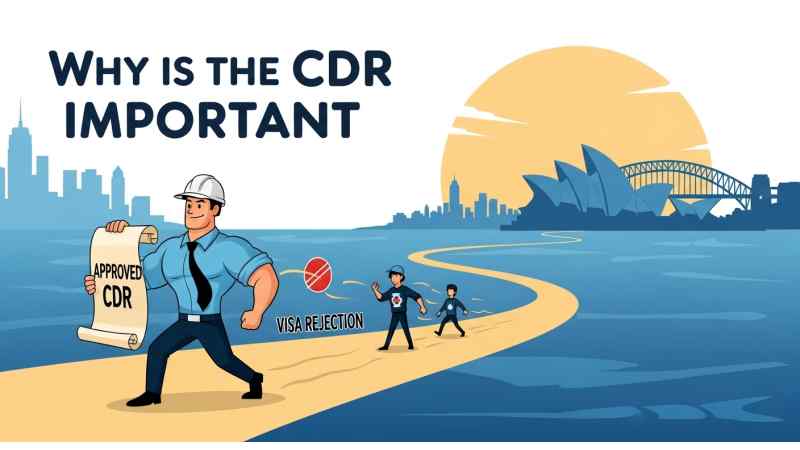
The CDR is extremely important because it is the key document on which Engineers Australia judges your engineering competency for migration purposes. A well-prepared CDR can be the difference between a successful skills assessment (leading to visa eligibility) and a rejection. Here are a few reasons why the CDR is so critical:
-
Demonstrates Your Competency: The CDR allows you to showcase your engineering knowledge and problem-solving abilities in detail. Engineers Australia assessors will evaluate whether your skills are up to Australian standards through this report. If you write your CDR well, you improve your chances of passing the skills assessment and eventually obtaining a skilled visa or permanent residency in Australia.
-
Required for Skilled Migration Visas: For most engineers migrating to Australia, a positive skills assessment from Engineers Australia is mandatory. The CDR forms the core of that skills assessment (hence the term “Skill Assessment CDR” for this process). Without an approved CDR, your visa application will not proceed. In short, your skilled migration application may be rejected if you don’t have a successful Engineers Australia CDR assessment.
-
Levels the Field for Non-Accredited Engineers: Since your degree might not be automatically recognized, the CDR is your chance to prove that your education and experience have given you equivalent competencies to an Australian-qualified engineer. It’s how you bridge the gap between your background and Australian requirements.
-
Strict Evaluation Standards: Engineers Australia has strict evaluation standards. A poorly written or incomplete CDR can lead to a negative outcome, which means you’d have to reapply (losing time, money, and possibly visa opportunities). In worst cases, not meeting ethical standards in your CDR can lead to bans (more on plagiarism and ethics later). Thus, it’s essential to treat the CDR with the same importance as a major technical project – with careful attention to detail and quality.
Bottom line: A strong CDR is essential for a successful skill assessment and migration journey. Next, let’s look at what exactly goes into a CDR and how to structure it.
Structure of the CDR (Competency Demonstration Report)
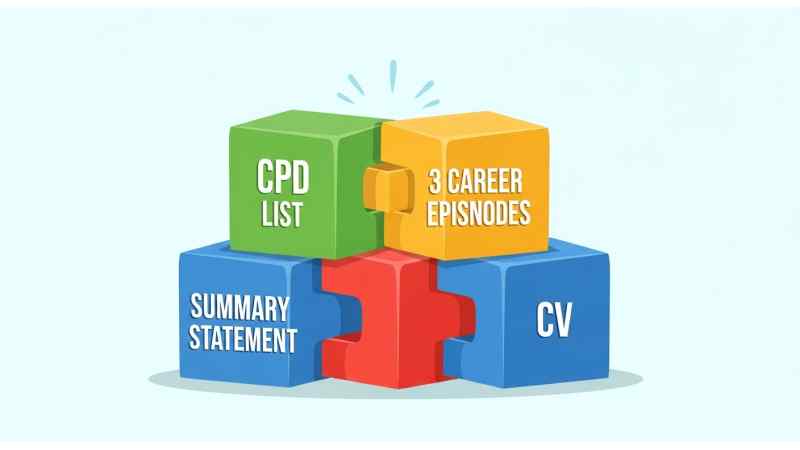
A CDR for Engineers Australia consists of four main components:
-
Continuing Professional Development (CPD) List
-
Three Career Episodes
-
Summary Statement
-
Curriculum Vitae (CV)
Each part serves a specific purpose and must adhere to Engineers Australia’s guidelines as outlined in the Migration Skills Assessment (MSA) booklet. The entire CDR must be written in English and in your own words, maintaining a professional tone and correct format. Let’s break down each component and discuss how to prepare them.
1. Continuing Professional Development (CPD)
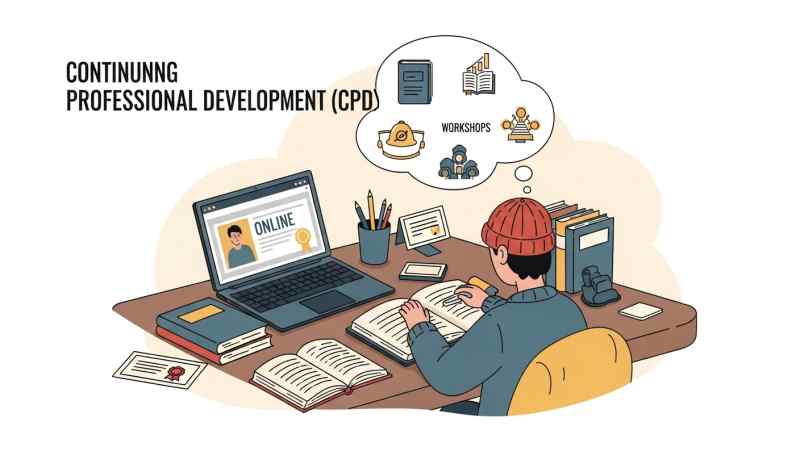
The Continuing Professional Development (CPD) section is a record of how you have kept your engineering knowledge and skills up-to-date after completing your undergraduate qualification. Engineers Australia uses this to verify that you remain informed about the latest developments in your field. Your CPD listing should include all relevant activities you have undertaken to grow or maintain your engineering competency.
Key points for the CPD section:
-
Format: Provide your CPD in a list or table format that includes the date, name of the activity, venue or provider, and (if applicable) duration of each activity. This is typically presented as a simple list of events/courses with brief details. Engineers Australia specifies that the CPD record “must be provided in table format (title, date, duration, venue and organiser)”. Ensure the CPD list is concise (it should usually fit on one page).
-
Content: Include all relevant activities such as:
-
Formal training courses, workshops, or seminars you attended.
-
Conferences or technical meetings you participated in.
-
Additional academic courses or online certifications you completed.
-
Technical presentations or papers you gave or attended.
-
Self-study activities (like reading technical journals, researching new engineering standards, etc.).
-
Any volunteering or mentoring in engineering that contributed to your professional development.
-
-
Relevance: Only list CPD items that are relevant to your engineering discipline or career. Quality is more important than quantity – a focused list demonstrates genuine engagement with your field. For example, a course on Advanced PLC Programming (Siemens, 2024) or attending the 2023 Structural Engineering Workshop (Institution of Engineers) would be relevant for an electrical or civil engineer respectively.
Sample CPD Table: Here’s a simplified example of how you might layout your CPD:
Tip: Keep the descriptions brief – usually the title of the course or seminar is enough along with the other details. You do not need to provide certificates for each CPD item in the CDR application, just the list is sufficient (Engineers Australia may ask for evidence separately if needed). Ensure your CPD list is truthful and up-to-date because you may be questioned on it.
2. Career Episodes
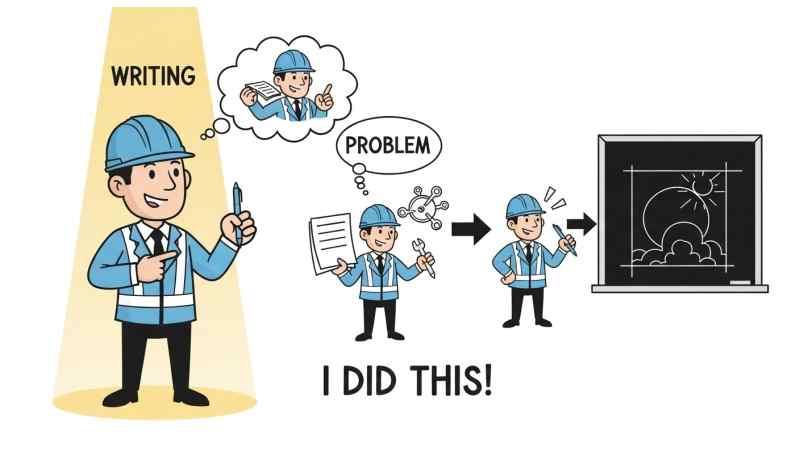
The Career Episodes are the most significant part of your CDR. You are required to write three (3) career episodes, each of which is an essay that describes a specific period or project in your engineering career. The purpose of the career episodes is to demonstrate your actual engineering work and how you applied your skills and knowledge in real situations. Each episode should highlight your personal role in an engineering task or project – it’s your story as an engineer.
Key requirements for Career Episodes:
-
Number and Length: You must write three separate career episodes. Each Career Episode should be between 1000 and 2500 words in length. This length allows you to provide enough detail about the project and your contributions without being too brief or overly verbose. Aim for a narrative that is comprehensive but focused on important details (many successful episodes are around 1500–1700 words each).
-
Focus and Perspective: Write in the first person (using “I” statements) and focus on what you did, not what your team or group did. Engineers Australia explicitly instructs applicants to write in first person to emphasize personal responsibility. The assessor wants to see your own contribution to the work. Phrases like “I designed…”, “I calculated…”, “I led the testing of…” are essential. Avoid generic statements like “We completed the design” or simply describing the team’s work – you need to pinpoint your role.
-
Choice of Topics: Each episode should be based on a distinct project or experience. You can draw from:
-
Projects done during your employment (preferred, if you have work experience).
-
An engineering project from your academic studies (especially if you are a recent graduate with limited work experience – e.g., a final year project or thesis can be used).
-
Any engineering problem you solved or significant task you undertook in a professional setting.
-
-
The three episodes can come from different jobs or projects, and even from academic work, as long as they collectively demonstrate a range of competencies. For example, you might choose one episode about designing a power system in a job, another about implementing a new process automation in another job, and a third about a research project you did at university. Ensure each episode highlights different aspects of your skills (don’t make all three about doing the same type of task).
Structure of a Career Episode: A career episode should be written in essay form but it helps to structure it into clear sections. A common structure (as also suggested by Engineers Australia) is:
-
Introduction (about 50-100 words): Identify the episode by stating the project’s name, dates and duration, location, and the organization you were working for. Also mention your job title at the time. This sets the context. (Think of it like the abstract of the story: what and when.)
-
Background (200–500 words): Describe the context of the project – the overall objective of the work, nature of the engineering project, the organizational structure or team, and your role and responsibilities in that context. The background should help the reader understand why the project was undertaken and what were the broad tasks. For example, you might explain the problem the project was addressing and how your role fit into the team.
-
Personal Engineering Activity (600–1500 words): This is the core of the episode, where you detail the actual work you personally performed. Describe the tasks you handled, problems or challenges you encountered, and the solutions or methods you applied. Be technical and specific: mention the engineering calculations you did, design decisions you made, tools or software you used, standards you followed, testing you conducted, etc.
If you faced constraints or issues, explain how you solved them. Essentially, you want to demonstrate your competency by showcasing how you applied engineering principles and knowledge:
-
Include any important calculations, analysis, or design work (if you have design diagrams, you can reference them, though in the CDR you mostly describe them rather than include extensive diagrams).
-
Explain why you chose a particular approach or solution – this shows your reasoning as an engineer.
-
If you worked in a team, clarify your part. For example: “I was responsible for the circuit design and I performed the load calculations, while my colleague did the programming. I collaborated with the team on integration, but my primary contribution was…”.
-
Maintain a narrative flow: start from how the task was assigned or identified, then what analysis/design you did, through to implementation or results.
-
Use paragraphs and perhaps sub-points for clarity, but remember to number the paragraphs (see note below on numbering).
-
-
Summary (50–100 words): Conclude the episode by summarizing the outcome of the project and reflect on your personal contribution. Mention if the project was successful and how your work contributed to that success. You can also note any lessons learned or how the experience helped you grow as an engineer.
To illustrate, example topics for career episodes might include:
-
Design and Analysis of an Electrical Power System for a New Manufacturing Plant – where you detail how you calculated loads, designed the circuit protection, selected equipment, etc.
-
Implementation of a SCADA system in Industrial Automation – where you describe your role in programming and integrating a SCADA for process control.
-
Optimization of an HVAC System for Energy Efficiency in a Commercial Building – explaining how you analyzed thermal loads and improved the HVAC design to save energy.
Each of these would allow an engineer to demonstrate different competencies (design, analysis, implementation, problem-solving, innovation, etc.). Choose episodes that collectively cover a broad range of skills.
Paragraph Numbering: A very important detail – you must number each paragraph of your career episodes. This is because you will need to refer to specific paragraphs in your Summary Statement. The recommended approach is to number them based on episode number and paragraph number. For example, for Career Episode 1, number the paragraphs as 1.1, 1.2, 1.3, …; for Episode 2, use 2.1, 2.2, 2.3, … and so on.
These numbers will be used as references to demonstrate which competency elements you addressed in each part of your narrative.
Writing Style: Write in a clear, formal style but make it personal (since it’s about your work). Avoid too much jargon without explanation – assume the assessor has a general engineering background but not necessarily expert in your niche. Avoid plagiarism at all costs – do not copy any text from internet sources or even from your own company documents verbatim.
Engineers Australia uses powerful plagiarism detection tools, and if they find copied content, your application will be rejected and you could face a ban of up to 36 months from reapplying. In their guidelines, Engineers Australia explicitly states the CDR “must be all your own work” and warns that misleading or plagiarized content can lead to severe sanctions, including notification to immigration authorities.
So, even if you got inspiration from a sample online, write it in your own words and focus on your unique experience.
Tip: It’s often helpful to draft each career episode in a story-like manner: set the scene (background), describe the plot (the technical challenge and what you did), then conclude with the resolution (outcome and reflection). Always emphasize your own actions and reasoning – imagine you’re being interviewed about the project and have to describe exactly what you did.
Using first-person and active voice keeps it focused on you (e.g., “I designed a PID controller to improve the system stability…” instead of “A PID controller was designed”). This approach will make your competency shine through.
3. Summary Statement
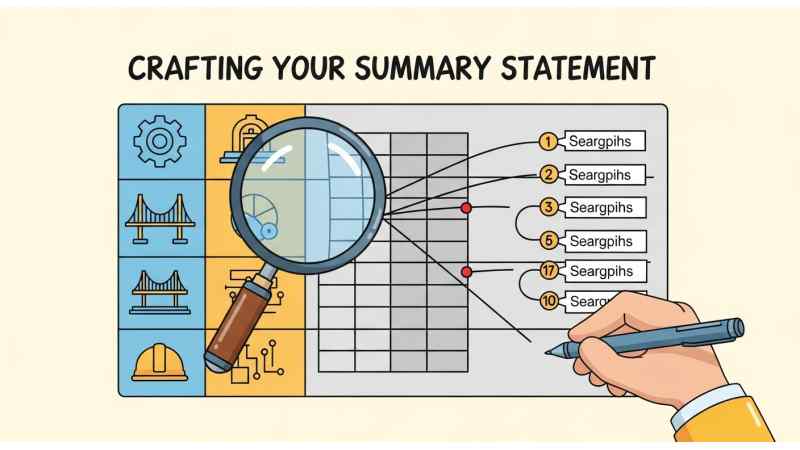
The Summary Statement (SS) is a document (typically one to two pages) that maps your competency elements to specific parts of your Career Episodes. Think of it as an index or checklist that demonstrates where in your narratives you have addressed each of the competency requirements set by Engineers Australia for your occupational category.
Key points about the Summary Statement:
-
One Summary Statement for all episodes: You only need to write one summary statement covering all three career episodes. This single document will refer to all episodes.
-
Competency Elements: Engineers Australia defines a set of competency elements (categorized under headings like Knowledge Base, Engineering Application Ability, Professional and Personal Attributes for Professional Engineers; similar but slightly different sets for Technologists, Associates, or Engineering Managers). For example, for a Professional Engineer, there are 16 elements within three broad units of competency. In the summary statement, you must address each required element and show where you demonstrated it.
-
Format: Engineers Australia provides templates for the summary statement for each category (Professional Engineer, Engineering Technologist, etc.). These templates list all the competency elements expected. You will typically create a table or list where for each element, you provide a brief explanation of how you have met it, and reference the specific paragraphs from your career episodes which show evidence of that element. For example, a row in a summary statement might look like:
-
Competency 1.2: Implements engineering techniques to solve problems – Refer to Career Episode 1, Paragraphs 1.3–1.6, where you described analyzing a problem and designing a solution; Career Episode 2, Paragraph 2.4, where you solved a different technical challenge.
-
In practice, it could be formatted as:
The above is just an illustrative example. Your actual summary statement will depend on which category you apply for (the competency elements differ for Professional Engineers vs Technologists, etc.) and the content of your episodes.
How to Write It: For each competency element, read through your career episodes and identify where you have demonstrated that skill or knowledge. Then, in the summary statement, concisely explain how you demonstrated it and point to the exact episode and paragraph. Be clear and specific. The assessor will cross-check your episodes to see the evidence. If an element is not demonstrated clearly, you risk being marked not competent in that area, so make sure all required elements are covered across your three episodes.
Cross-Referencing Example: Let’s say one competency element is “Use of engineering tools and IT effectively”. You might have used a software or simulation tool in one of your episodes. In the summary statement, you can write something like: “I utilized AutoCAD and MATLAB to model and simulate the system, optimizing the design (CE2, paragraph 2.4).
I also wrote a custom Python script for data analysis (CE2, paragraph 2.5).” This tells the assessor exactly where to look in Career Episode 2 for evidence of you using engineering tools.
Be Honest and Precise: Do not claim competencies that you cannot back up with your narrative. The summary statement should only refer to things you actually did and wrote about in the episodes. It’s essentially a mapping exercise – no new information should appear in the summary that’s not in the episodes. Also, ensure you reference the correct paragraph numbers (one reason numbering your paragraphs properly from the start is critical).
Tip: Drafting the summary statement can be tricky, because it requires careful reading of your own stories and the competency definitions. A good approach is to create a checklist of all competency elements for your category, then mark next to each which episode (and paragraph) covers it. If you find some elements are not addressed at all, you may need to adjust your career episodes to include something relevant.
Many applicants actually write the summary statement after writing the career episodes to ensure they have covered everything. It’s okay if one episode addresses multiple elements and another episode covers fewer – what matters is that collectively the three episodes hit all the points required.
4. Curriculum Vitae (CV)

The Curriculum Vitae (CV) is the final component of the CDR. It’s basically your professional résumé outlining your education and work history. Engineers Australia requires a CV to understand your overall background and to verify the chronology of your engineering experience.
Key guidelines for the CV:
-
Length and Format: The CV should be chronological (order) and typically no more than three pages long. It should be written in reverse chronological order, meaning your most recent education/employment is listed first. Use a clear format with headings for sections like Education, Work Experience, Professional Training, etc.
-
Content: Include the following details:
-
Educational Qualifications: List your degrees (e.g., Bachelor of Engineering, Masters, etc.) with institution names and graduation dates. If you have relevant thesis or project work, you might mention it briefly under the degree.
-
Work Experience: For each relevant job position you’ve held, provide the job title, employer name, location, and dates (start–end). Under each job, briefly describe your duties and achievements. Focus on engineering responsibilities and tasks. This part should align with what you described in your career episodes (e.g., if you wrote a career episode about a project at job X, ensure job X appears in your CV with corresponding dates).
-
Professional Certifications or Training: Mention any additional certifications (like PMP, or specific technical certifications) or significant training courses not already in the CPD if you want to highlight them here as well.
-
Professional Memberships: If you are a member of any engineering societies or have professional registration in any country, include that.
-
Contact Information: Make sure your CV has your full name and contact details at the top (and those should match the details in your EA application).
-
-
CV vs. CPD: Don’t confuse the CV with the CPD list – they are separate. The CV is broader: it’s your career snapshot. The CPD is just continuing education activities. There may be a slight overlap (e.g., if you did a significant course, it could appear as a one-liner in CPD and also be mentioned in your CV’s professional development section).
-
Consistency: Ensure dates and details are consistent between your CV and the Career Episodes. Inconsistencies (like a career episode describing a project in 2019 but your CV shows you started that job in 2020) could raise questions. Double-check everything for accuracy.
Tip: Think of the CV as supporting material. It won’t be assessed for competencies directly, but it provides context to the assessor. A well-organized CV (clear layout, no typos, professional tone) creates a good impression of your professionalism. Use standard reverse-chronological format: for example:
Design Engineer – XYZ Company, Melbourne (Jan 2021 – Present): Duties: Lead the design of electrical power distribution systems for commercial projects. Conduct load calculations, prepare single-line diagrams, coordinate with clients and contractors, integrate SCADA systems for automation, and ensure compliance with Australian standards. Key projects include the design of a 5MW solar farm and upgrade of a factory power system.
Maintenance Engineer – ABC Ltd., Dubai (Jul 2018 – Dec 2020): Duties: Responsible for the maintenance and troubleshooting of manufacturing equipment. Performed regular inspections, diagnosed electrical faults, implemented a preventive maintenance schedule, and reduced downtime by 15%. Gained experience with PLC-controlled systems and power distribution maintenance.
Bachelor of Electrical Engineering – University of XYZ (2014 – 2018): Graduated with First Class Honours. Completed a capstone project on “Optimization of Smart Grid Energy Distribution using IoT,” which laid the foundation for interest in power systems.
Keep descriptions concise and focus on engineering outcomes and responsibilities.
Common Mistakes to Avoid in Your CDR
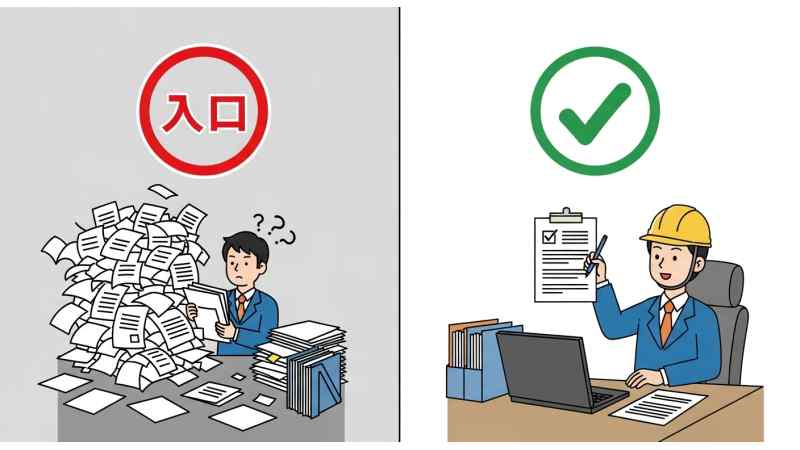
Preparing a CDR is a complex task, and there are several common pitfalls that you must avoid to ensure your report isn’t rejected or flagged by Engineers Australia. Here are some major mistakes and how to avoid them:
❌ Plagiarism or Copying Content: This is the number one mistake that can ruin your application. Do not copy any part of your career episodes from someone else’s CDR or from online examples. Engineers Australia uses sophisticated plagiarism detection and will recognize copied text (even if you change a few words around). The CDR must be entirely your own work and written in your own words.
If even one career episode is found plagiarized or not genuinely your work, your application will be rejected, and you could face a ban of 12 to 36 months from reapplying. Always write originally and cite any necessary references (though usually CDRs are about personal experience, so external references are minimal). It’s fine to look at CDR samples for guidance, but never copy their text or even their exact project story.
Use them only to understand format and depth, then write your unique story.
❌ Focusing on Team Achievements Instead of Personal Role: Many engineers work in teams, which is normal, but your CDR should highlight what you did. A mistake is to describe “we did this, we achieved that as a team.” The assessors cannot give you credit for something if they can’t tell what your individual contribution was.
Even if it feels awkward, you must somewhat “toot your own horn” in the CDR – clearly state your own tasks and decisions.
For example, instead of “My team installed the new control system,” say “I configured and tested the new control system, leading the team during installation.” Avoiding the first-person or overly collectivizing the work will make it hard for EA to judge your competency, and they might assume you were just a passenger in the project. Remember, it’s about what I did, not we.
❌ Insufficient Technical Detail: Another common mistake is writing a career episode that reads like a high-level project summary or management report with no depth. Assessors are engineers; they expect to see technical meat in your stories. If you only describe general tasks (“I managed the project and we finished on time”) without explaining the engineering problem or how you applied engineering principles, the CDR will not demonstrate your competencies.
Make sure to include things like calculations, analysis, design decisions, technical problems and how you solved them, tools or software used, standards followed, etc.
For instance, rather than saying “I designed a beam for the structure,” mention the key aspects like “I calculated the load and bending moment for the beam using AS/NZS structural code, selected a suitable steel section (UB 250) to handle the stresses with a safety factor of X, and verified deflection criteria.” You don’t need to include pages of calculations, but enough detail to show you know what you’re doing technically.
Including quantitative results or specific technical approaches strengthens your CDR.
❌ Poor Organization and Formatting: A CDR is also a test of your communication skills. Poorly structured narratives, grammar mistakes, or chaotic formatting can frustrate the assessor. Avoid long, unbroken paragraphs – use headings or separate sections for intro/background/etc within each episode. Number your paragraphs properly for the summary statement cross-reference. Use clear language – the assessor may not be an expert in your exact field, so clarity is key.
Also, adhere to any formatting guidelines given by EA (for example, some applicants include each Career Episode as a separate document or clearly start each on a new page; ensure the overall compilation is neat). Before submission, proofread your entire CDR for typos and consistency. Professional, error-free writing reflects well on your application.
❌ Overemphasis on Non-Engineering Aspects: Sometimes applicants spend too much time in their episodes describing background, company info, or managerial tasks and not enough on engineering. Keep the background section concise – just enough to set context. The majority of each episode should be about engineering work you did.
If you were in a managerial role, you still need to highlight how you applied engineering knowledge in decision-making, problem-solving, or design – pure people management or budgeting details won’t satisfy the technical competency criteria. Also, avoid including irrelevant personal info or anecdotes that don’t contribute to demonstrating a competency.
❌ Including Too Much Collaborative Work without Clarity: It’s okay if your project was team-based or if you were not the sole contributor. But in your writing, do not just list what the team accomplished as a whole. Always follow up any mention of team activity with clarification of your part. For example, “Our team tested the prototype; I specifically handled the thermal performance tests and data analysis.” Without that, the assessor might think you’re claiming credit for work you didn’t do.
❌ Ignoring the Competency Elements: Ultimately, Engineers Australia has a checklist of competencies (things like problem-solving, application of standards, communication, ethical practice, etc.). If your episodes altogether fail to demonstrate one of these, you might get a negative result. A mistake would be not reviewing the required elements before writing. Ensure that across your three episodes you have at least touched on each competency element for your category.
For instance, if one element is about ethical considerations, make sure somewhere in your stories you mention how you addressed a safety issue or followed a code of ethics. If an element is about communication, mention any report you wrote or presentations or teamwork experiences. In short, map your stories to the competencies (that’s what the Summary Statement forces you to do).
If you realize you left something out, edit the episodes to include it.
By being aware of these common errors, you can review your CDR draft critically and improve it before submitting. It might even be worth asking a trusted colleague or mentor to read your career episodes to see if your role and the technical narrative are coming through clearly.
Getting Professional Help with Your CDR (Engineers Australia CDR Help)
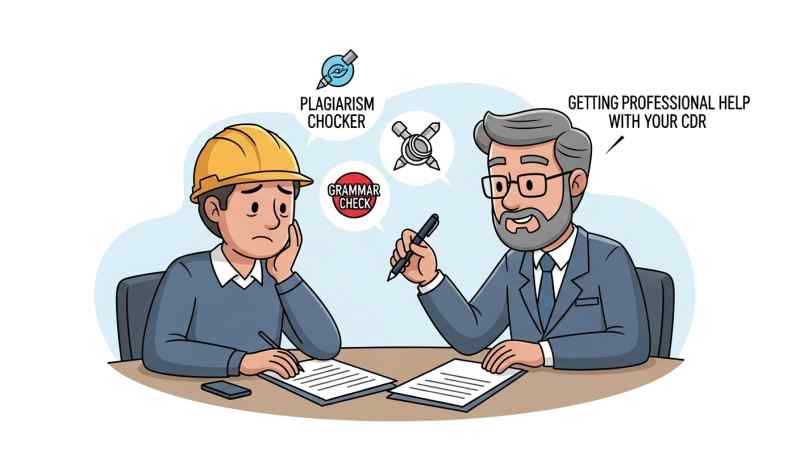
Writing a CDR can be daunting – not everyone is confident in writing long technical narratives in a formal style. If you find yourself struggling, you might consider seeking assistance. There are professional services and experienced engineers/writers who offer CDR writing help, often advertised as Engineers Australia CDR help. These services can guide you in preparing your documents to meet the EA requirements.
Here’s how professional CDR assistance might help you:
-
Plagiarism-Free Writing: Experts can help ensure that your Career Episodes are written from scratch and free of plagiarism, while still reflecting your personal experience. They know the importance of originality and can use plagiarism-check tools to double verify.
-
Structured Career Episodes: Professionals familiar with CDRs know the expected structure and tone. They can help outline your episodes with clear introductions, backgrounds, technical content, and conclusions, making sure all relevant details (dates, responsibilities, etc.) are included in the right places.
-
Competency Mapping: Perhaps one of the biggest challenges is making sure your stories cover all the competency elements and then correctly mapping them in the Summary Statement. Consultants can help with accurate competency mapping – identifying where in your narrative a particular competency is demonstrated, and ensuring it’s highlighted.
-
Summary Statement Drafting: They can either guide you or draft a summary statement that properly references your episodes. This can save a lot of time and ensure you don’t miss any key element.
-
Language and Formatting: If English isn’t your first language or you’re not confident in technical writing, a professional editor or CDR writer can polish your language. They will correct grammar, use a professional tone, and format the document according to EA guidelines (proper paragraph numbering, layout of CPD table, etc.). The end result should be an error-free, well-presented report.
-
Review and Feedback: Even if you write your own CDR, you could have a professional review it. They can provide feedback on whether your episodes sufficiently address the competencies and are free of any red flags (like too much teamwork focus or lack of detail).
However, a few words of caution if you seek help:
-
Ensure Authenticity: You must provide the content of your experiences. Avoid any service that promises to fabricate projects for you – that can lead to false information, which is unethical and could get you banned if discovered. The best use of a CDR service is as a guide or editor, not as someone to invent things for you.
-
Confidentiality: Your CDR contains personal career information. Make sure you engage a reputable service that keeps your data confidential.
-
Engineers Australia’s Stance: Engineers Australia expects the CDR to be your own work. They likely assume you might get some help (just as one might get a friend to proofread), but if a CDR is clearly not written by the candidate, it can sometimes be evident. Use professional help to improve your writing, but the ideas and projects must come from you. Some migration agents offer CDR writing as part of their services – just ensure they maintain your voice and truthfulness.
If used wisely, professional guidance can significantly improve the quality of your CDR and boost your confidence in the submission. Our team, for instance, has experienced writers and engineers who have helped many applicants craft successful CDRs. We ensure each report is tailored to the individual, thoroughly checked, and compliant with EA’s expectations.
Need some help? Feel free to reach out to us for expert assistance with your Engineers Australia CDR. Whether you need a full writing service or just a thorough review and feedback, getting a second pair of eyes can be invaluable to avoid mistakes. The goal is to help you present yourself in the best possible light so you secure that all-important positive assessment.
Final Thoughts on CDR for Engineers Australia
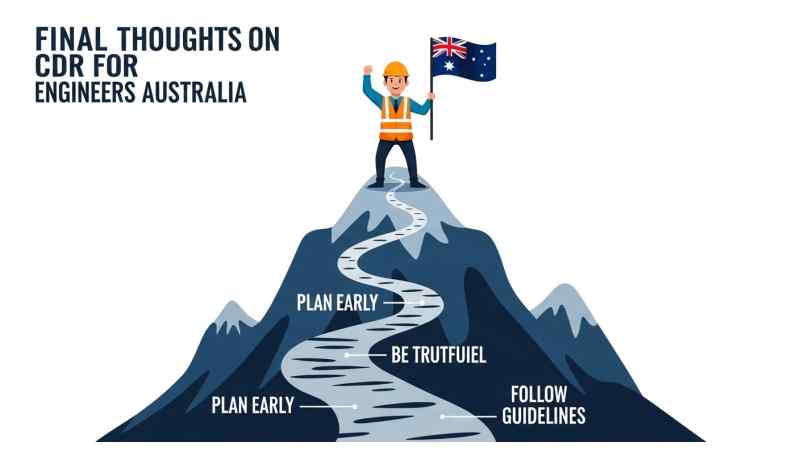
A Competency Demonstration Report for Engineers Australia is not just a formality – it’s a detailed showcase of your engineering journey and capabilities. By understanding the required format and dedicating time to each component, you can craft a CDR that truly reflects your strengths and meets Australian standards.
Let’s recap some key takeaways:
-
Start Early and Plan: Given that a CDR is lengthy (three 1000-2500 word essays + other documents), start well ahead of your visa application deadline. Plan which projects you will write about for your career episodes. Gather any reference materials (old project reports, drawings, etc.) to help jog your memory for technical details.
-
Follow the Guidelines: Use Engineers Australia’s MSA booklet and official resources as your primary reference. They clearly outline how to format CPD, how to write episodes (including first person narrative and word counts), and how to prepare the summary statement. Following these guidelines closely is crucial, since deviating from them could annoy the assessors or lead to omissions.
-
Be Truthful and Specific: Honesty is fundamental. Don’t exaggerate or include anything you can’t back up. At the same time, be specific about your contributions – the assessors were not there, so you need to paint a vivid picture of what you did. Specificity and clarity will make your competencies evident.
-
Review Against Competencies: After writing, always loop back to the competency elements. Check off each one to ensure you have evidence for it in your episodes. This practice will directly feed into a strong summary statement and a successful assessment.
-
Polish the Language: Remember that the CDR also reflects your communication skills. Engineers Australia wants to see that you can communicate effectively in English in a professional context. So, ensure the writing is clear, concise, and free of slang or overly casual tone. If needed, get someone with strong English skills to proofread your work (or use professional help as discussed).
-
Stay Ethical: The process is an assessment of not only your skills but also your integrity. Plagiarism or false information is a breach of ethics and could have severe consequences beyond just a rejection (including being reported to immigration authorities). Maintain the highest standard of ethics in preparing your report.
At the end of the day, writing a CDR is a challenging task – it forces you to reflect deeply on your own experiences and present them in a structured, competency-oriented way. But it’s also an opportunity to showcase your achievements and convince the Australian authorities that you are a proficient engineer ready to contribute in Australia. Many have successfully gone through this process, and with careful effort, you can too.
Good luck with your CDR preparation! And remember, if you need guidance or a professional eye to review your work, help is available – don’t hesitate to seek advice to make your CDR the best it can be. A bit of extra effort now can pay off in achieving your goal of an Australian engineering career.
Want professional help writing or reviewing your CDR? Contact us today and let our experts ensure your CDR meets Engineers Australia’s expectations, so you can move one step closer to your Australian dream.
Frequently Asked Questions (FAQs)
Q1: How many words should each Career Episode be?
Each Career Episode should be between 1,000 and 2,500 words in length. This is the range recommended by Engineers Australia. Staying within this range ensures you provide enough detail without being too lengthy. Most successful episodes are around 1,200 to 1,800 words. Remember, quality of content is more important than just word count – focus on covering the competencies and your personal contributions comprehensively within this limit.
Q2: Can I use free CDR report examples from the internet to write mine?
You can refer to CDR examples to understand the format and level of detail, but you must not copy any content from them. Do not use any phrasing or material directly from sample CDRs. Engineers Australia takes plagiarism very seriously – if you submit a CDR that is not original, it will be rejected. You may even face a ban on reapplying for up to 12-36 months for plagiarism or misleading information.
It’s fine to get inspiration on how to structure your report, but always write your CDR in your own words, based on your own experiences. Think of examples as just learning tools, not templates to be duplicated. Every engineer’s story is unique, and your CDR should reflect your individual work and achievements.
Q3: How long does it take for Engineers Australia to assess a CDR?
The standard processing time for a CDR-based skills assessment by Engineers Australia is typically around 8 to 12 weeks (about 2 to 3 months) after you submit your application. However, this timeframe can vary. Sometimes, due to high application volumes or complex cases, it might take a bit longer. Engineers Australia’s official guidance in 2025 noted it could take up to 15 weeks to be assigned to an assessor in standard cases.
If you are in a hurry, Engineers Australia offers a Fast Track service, for an additional fee. Fast Track applications are usually processed in about 20 working days (approximately 4 weeks). Keep in mind that Fast Track only speeds up the queue – you still need to provide a quality CDR, and it doesn’t guarantee a positive outcome, only a quicker one. After submission, you can check your application status through the EA online portal.
It’s also worth ensuring all your documents are complete and clear, as any request for additional information can pause the clock and add weeks to the process.
Q4: Can I submit more than three Career Episodes or replace one if it’s not strong?
No – Engineers Australia specifically requires three (3) Career Episodes, no more and no less. You should submit exactly three episodes in your CDR application. It’s important to choose your three best examples of engineering work that collectively demonstrate the range of competencies.
You cannot submit a fourth to “boost” your application; any extra material beyond the required three episodes will not be considered and would just waste the assessor’s time (or could even annoy them). If you are unsure about one of your episodes, it’s better to improve it or replace it before submission. But at the point of submission, stick to three. Quality matters more than quantity. Plan accordingly and make every episode count.
If, down the line, your assessment is not successful, you would have to apply for a review or submit a new application – at that stage you could write a new episode to replace a weak one. But initially, put your effort into three solid episodes for the best chance of success.
Q5: Do I need to attach documents like drawings or code printouts in my CDR?
The CDR is mostly a textual report. Engineers Australia does not ask you to attach large design documents, drawings, or code snippets with the CDR itself. What they want is your narrative explanation. You can include key diagrams or images within the narrative if they help illustrate a point (ensure to label them and refer in text), but this is usually optional. If you do include any figures, they should be your own and relevant.
For most applicants, simply describing the technical work in words is sufficient. If additional evidence is needed (say, proof of employment or project), EA will request it separately. Focus on making your written explanation clear enough that it stands on its own. If you reference a specific standard or calculation, you don’t need to attach the entire standard or calculation sheet – just explain it in the text.
The assessors are experienced engineers; they will understand from your description if you’ve done the work correctly.
Q6: Is the CDR the only thing I need for an Engineers Australia Skills Assessment?
Along with the CDR, you need to submit other documents as part of your Migration Skills Assessment application. These typically include: personal identity documents (passport, photo), your academic degree certificates and transcripts, English language test results (like IELTS/TOEFL, if required), and evidence of employment (like reference letters) for any experience claimed in your career episodes.
The CDR (CPD, Episodes, Summary Statement, CV) is the core of the technical assessment, but Engineers Australia will also verify your credentials and employment. Make sure to prepare those documents as well. The MSA Booklet and EA website list all required documents. If anything is missing or not in the proper format, it can delay your assessment result. We hope this comprehensive guide has answered your questions about preparing a CDR for Engineers Australia.
Writing a CDR may seem challenging, but with the right approach and careful adherence to guidelines, you can create a strong report that showcases your engineering capabilities. Stay focused, be thorough, and best of luck with your Engineers Australia skill assessment and your journey to becoming a professional engineer in Australia!
CDR for Engineers Australia: Best Guide 2026
CDR for Engineers Australia should start with the applicant selecting real engineering evidence instead of generic duties. A strong CDR for Engineers Australia page explains the project context, personal engineering actions, and measurable outcomes. Use CDR for Engineers Australia to connect career episode examples with Engineers Australia competency elements. The best CDR for Engineers Australia preparation keeps claims specific, factual, and supported by documents.
For migration applicants, CDR for Engineers Australia is most useful when it avoids copied samples and focuses on individual work. CDR for Engineers Australia can improve review quality when each project paragraph answers what, why, and how. Before submission, CDR for Engineers Australia should be checked for structure, evidence, language clarity, and consistency. Applicants using CDR for Engineers Australia should keep CPD, summary statement, and career episode details aligned.
A practical CDR for Engineers Australia checklist helps reduce avoidable Engineers Australia assessment delays. Professional CDR for Engineers Australia support should protect accuracy while improving readability and presentation. The CDR for Engineers Australia process also helps applicants identify missing technical details before final review. Every CDR for Engineers Australia draft should show the engineer’s own decisions, calculations, coordination, and problem solving.
CDR for Engineers Australia is strongest when the final document is clear enough for an assessor to follow quickly. A final CDR for Engineers Australia review should confirm that the report supports the nominated occupation. Using CDR for Engineers Australia carefully helps keep the application focused on evidence rather than broad claims. Well planned CDR for Engineers Australia content can make the complete CDR package easier to assess.
A reliable CDR for Engineers Australia workflow includes topic selection, drafting, checking, and final compliance review. The main purpose of CDR for Engineers Australia is to present engineering competency in a clear migration assessment format. For overseas engineers, CDR for Engineers Australia should balance technical depth with simple, direct English. The best result from CDR for Engineers Australia is a report that is accurate, original, and easy to verify.
When using CDR for Engineers Australia, applicants should match each claim with real project evidence. A strong CDR for Engineers Australia draft avoids vague teamwork claims and explains personal contribution. Good CDR for Engineers Australia preparation also checks grammar, formatting, and cross references before upload. Complete CDR for Engineers Australia support should improve confidence without changing the facts of the engineering project.
CDR for Engineers Australia works best when the applicant records dates, tools, standards, and responsibilities clearly. A careful CDR for Engineers Australia review can reveal gaps in project evidence before Engineers Australia assessment. The final CDR for Engineers Australia document should be original, structured, and consistent with the applicant’s background. CDR for Engineers Australia is easier to assess when each paragraph has one clear purpose and concise wording.
Applicants should use CDR for Engineers Australia to show engineering judgement, not only task descriptions. A complete CDR for Engineers Australia package should align the career episodes, summary statement, and supporting documents. CDR for Engineers Australia should include enough technical detail to prove the applicant worked at the required level. The most useful CDR for Engineers Australia review checks evidence, formatting, language, and competency coverage together.
For skilled migration, CDR for Engineers Australia should present the applicant’s role in a direct first-person style. A focused CDR for Engineers Australia plan helps applicants avoid repeated information across career episodes. Successful CDR for Engineers Australia preparation keeps the assessor’s questions in mind from the first draft. A clear CDR for Engineers Australia structure can make complex engineering projects easier to understand.
The final CDR for Engineers Australia check should remove vague claims and keep only evidence-based statements. Useful CDR for Engineers Australia support explains calculations, design choices, testing, safety, and project outcomes. Applicants can strengthen CDR for Engineers Australia by linking each achievement to a real engineering problem. Accurate CDR for Engineers Australia preparation reduces the chance of confusion during document review.
A polished CDR for Engineers Australia draft should be easy to read without losing technical substance. Each CDR for Engineers Australia section should support the migration skills assessment goal clearly. The best CDR for Engineers Australia outcome is a complete, honest, and well organised application file. Before uploading, CDR for Engineers Australia should be reviewed against the latest Engineers Australia expectations.
CDR for Engineers Australia checklist for Engineers Australia
- Confirm the nominated occupation and ANZSCO code before drafting.
- Use project evidence that shows your own engineering decisions.
- Keep paragraphs short, specific, and easy for an assessor to scan.
- Review the latest Engineers Australia guidance before submission.